A Marathon with Micro Four Thirds

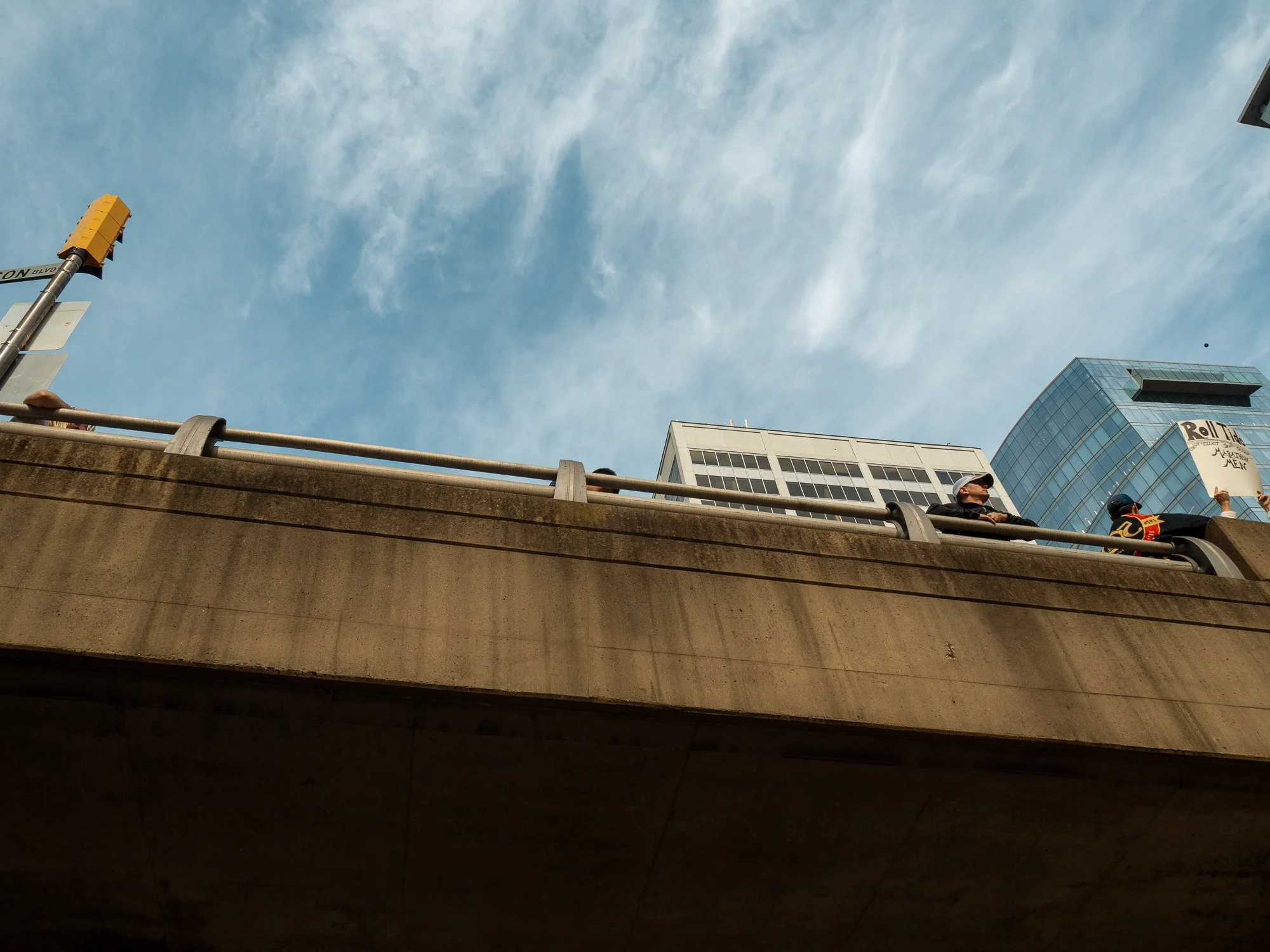
Onlookers wave from overhead bridge during Marine Corps Marathon 2025
OM-5 . Olympus 14-42mm f3.5-5.6 EZ @ 14mm . f/5 . 1/400” . ISO 200
I had run a marathon before and I wasn’t sure I’d do it again. It’s a big time commitment and I have a young family. They appreciate when I’m around for breakfast and the morning routine. I enjoy the morning shift as family cook. But as I watched a growing list of friends and acquaintances signing up for the 50th Marine Corps marathon, I knew it could be good for me. I hadn’t been very consistent in my running lately. I had no objective. I’d given up hope of significant speed improvement, which used to motivate me to train consistently. I needed a goal to nudge me out of stasis. I also had a long unrealized dream of being a regular sunrise runner and photographer. Maybe there was a chance I could combine those desires—to get out for runs before the sunrise with a camera ready to catch whatever spectacular light could be found.
Galen Rowell was an inspiration. He was a pioneer of running with cameras. He lived in Bishop, California at the base of the Sierras and often traveled to even more majestic and far-flung mountains. He kept a steady habit of trail runs around dawn and dusk, and always had a camera with him. He even designed his own system for carrying cameras while running that was sold by Photoflex decades ago. It was a chest pouch with optionally attachable lens pouches on the side. These carrying systems are long out of production. Most have worn out from loving use. You can find traces of them on eBay, but finding a working system is rare.
I sometimes dreamed of moving to a mountain town like Bishop and attempting to emulate Galen, but it wasn’t in the cards. Plentiful jobs, a healthy church, and a solid community have kept me in D.C. It’s a beautiful city. I needed to embrace it photographically. Instead of leaving the camera in a box until a rare trip to the mountains, I should embrace the city scapes where I live. Training for another marathon would be a great opportunity to do that with some consistency.
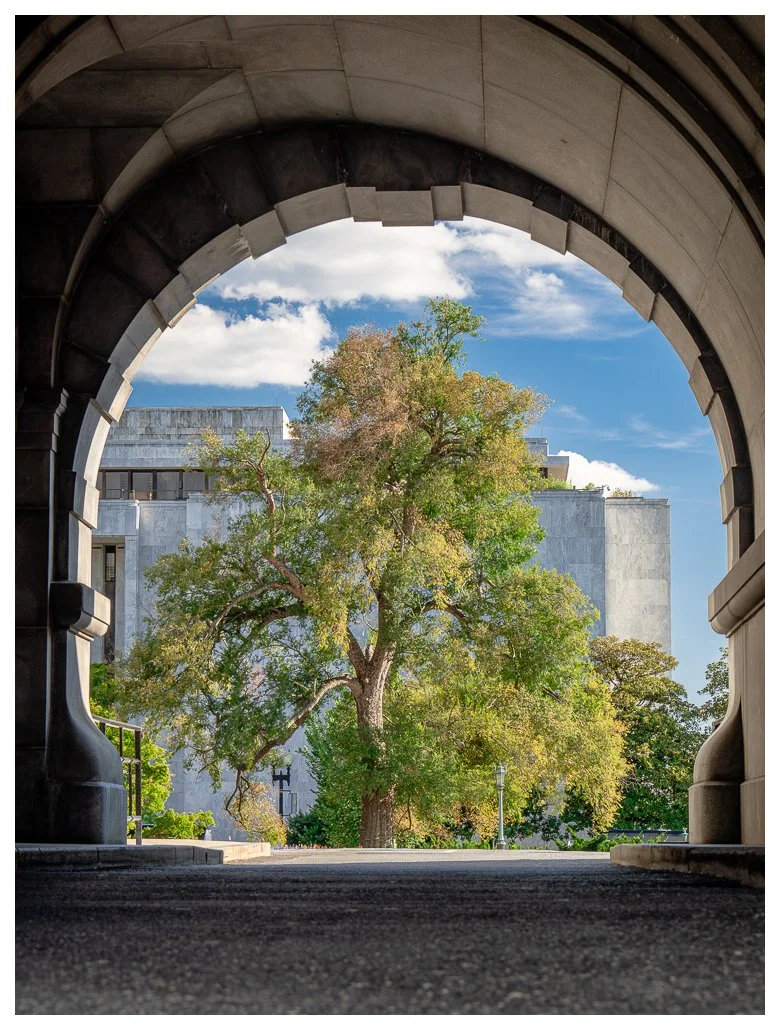
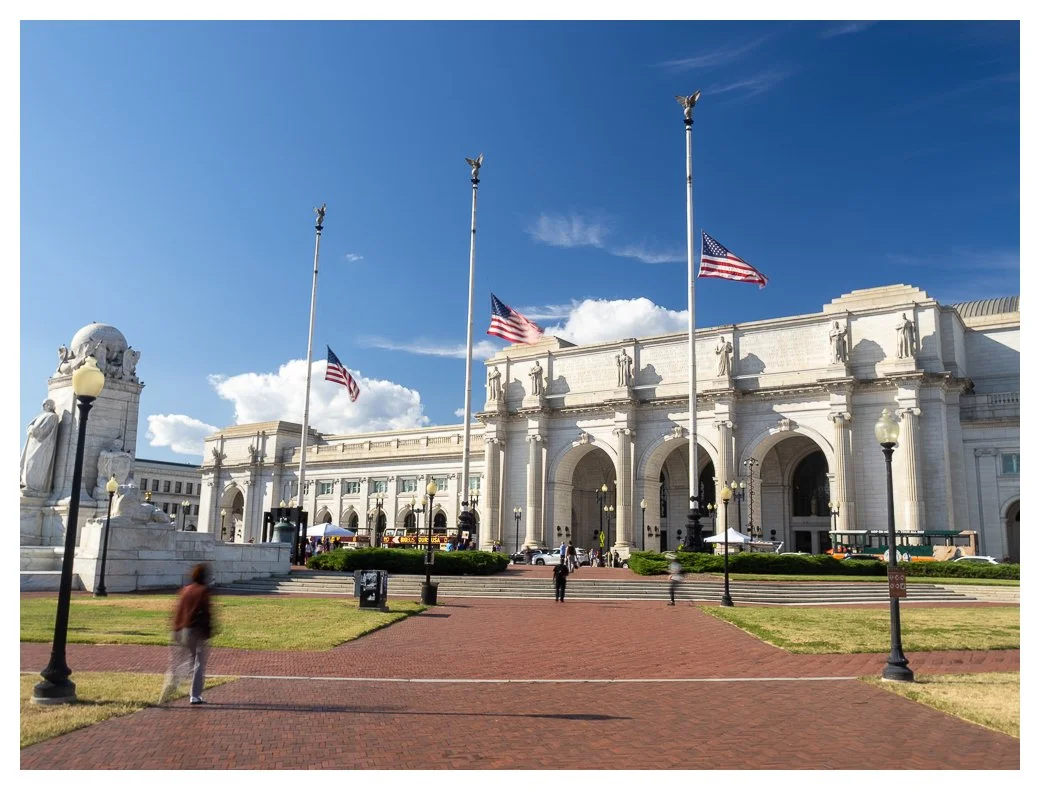
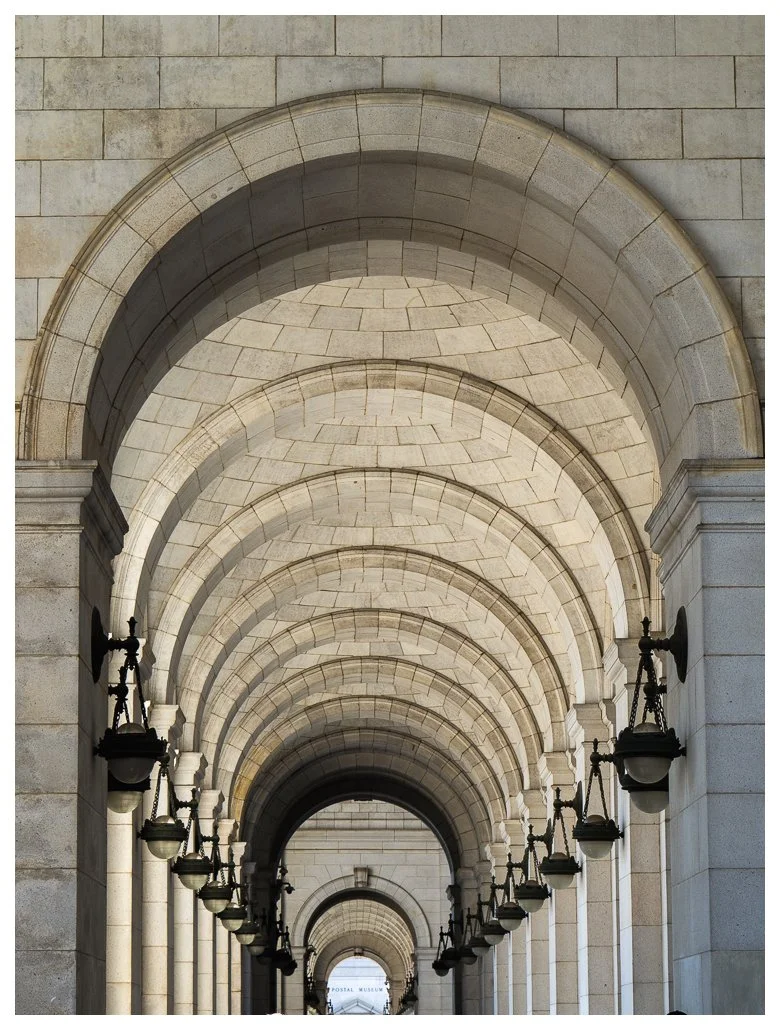
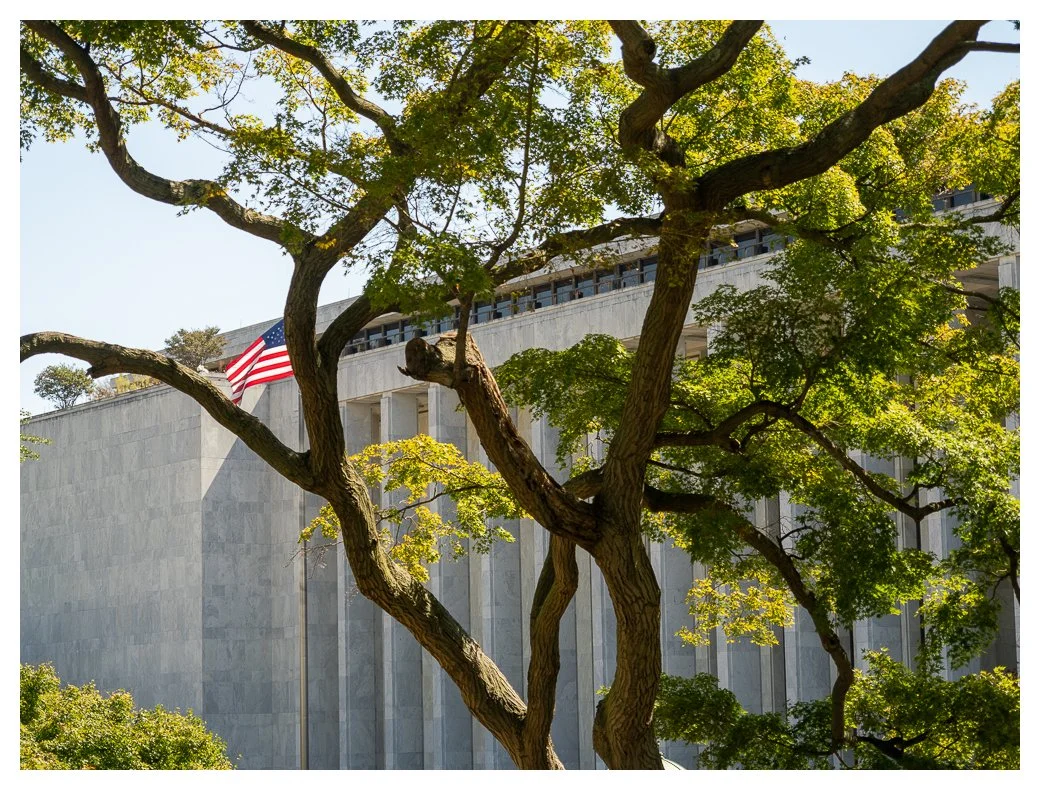
For my previous marathon I was more interested in the physical training than photography. I did carry a phone on long runs and would sometimes stop for pictures. They usually turned out worse than I’d hoped. My old iPhone 12 mini wasn’t doing it justice. A few times I tried to carried a real camera with me, but it slowed me down and distracted from training. I didn’t get spectacular results when I brought it. Previously I was using a Canon EF-M mount camera — an APS-C only mount which was Canon’s first foray into the mirrorless market. After the mirrorless market had proven itself, Canon abandoned the EF-M mount in favor of the full frame compatible RF mount. The lens options are limited to what they released during the few years it was supported. There are some good primes for EF-M, but the available zooms are lackluster. My m6 mark ii was a great little camera, but it lacked any sort of stabilization. That meant a tripod was necessary for good low light shots, which meant even more weight and distraction from the primary goal of running.
But this year I was newly and enthusiastically into a new camera system — the micro-four thirds lens mount and Olympus/OM System bodies and lenses. The sensor is a little smaller than APS-C, but the selection of lenses is amazing and the bodies are robust and have excellent stabilization. It’s a near perfect fit for someone who wants to do both serious photography and marathon training at the same time. I think Galen Rowell would have loved it. A few months of early morning training runs would be an excellent opportunity to put this new camera gear to good use.
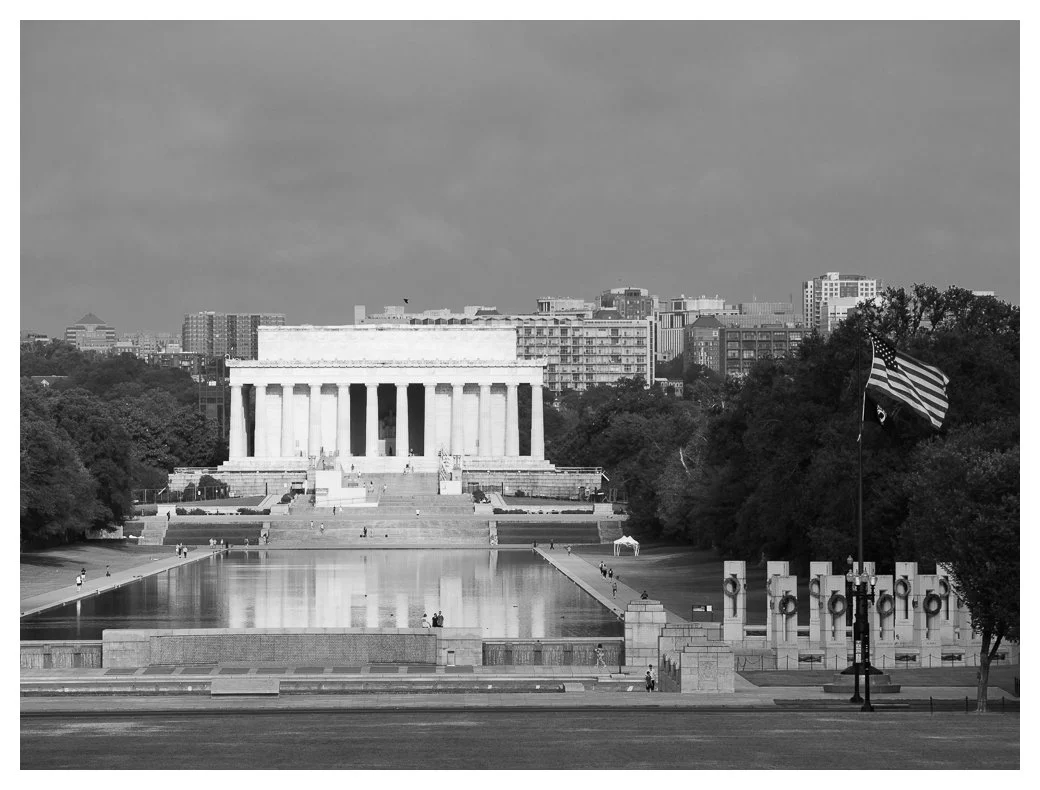
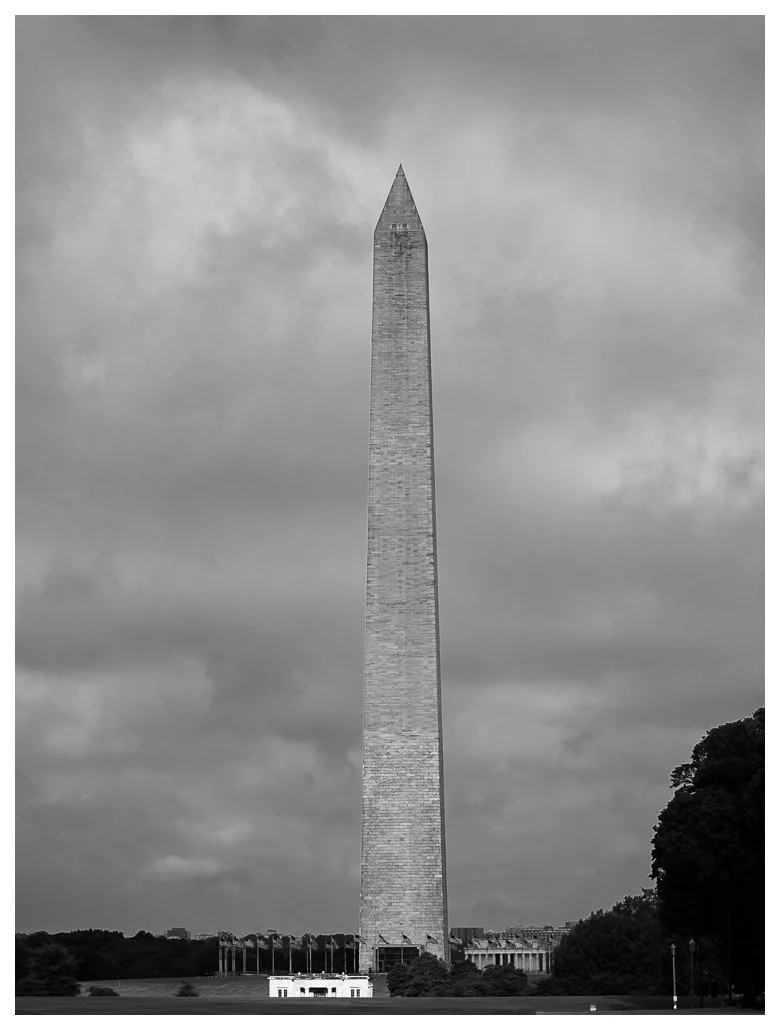
Running and photography are wonderfully symbiotic hobbies. Traveling through the world on foot gives you plenty of opportunities for noticing things. Having a regular running schedule also encourages consistency in photography. If you want to improve at running, you must be consistent. Bringing a camera along means you’re likely to improve at both disciplines. Looking out for photographs keeps your mind engaged while running. The fleeting nature of light gives you a reason to get out when the light is good. Being out consistently means you’re more often there and prepared when a decisive moment arrives. And setbacks in one area can be offset in another. If the sunset wasn’t great, at least you got some exercise. If you aren’t developing the running speed you’d hoped for, at least you’re collecting photographs and hopefully improving with photography.
I explored the city, venturing off my normally beaten paths to find new compositions. I saw some spectacular sunrises. I got a few photos featured in the local paper’s weather section. And I think my photography skills have improved.
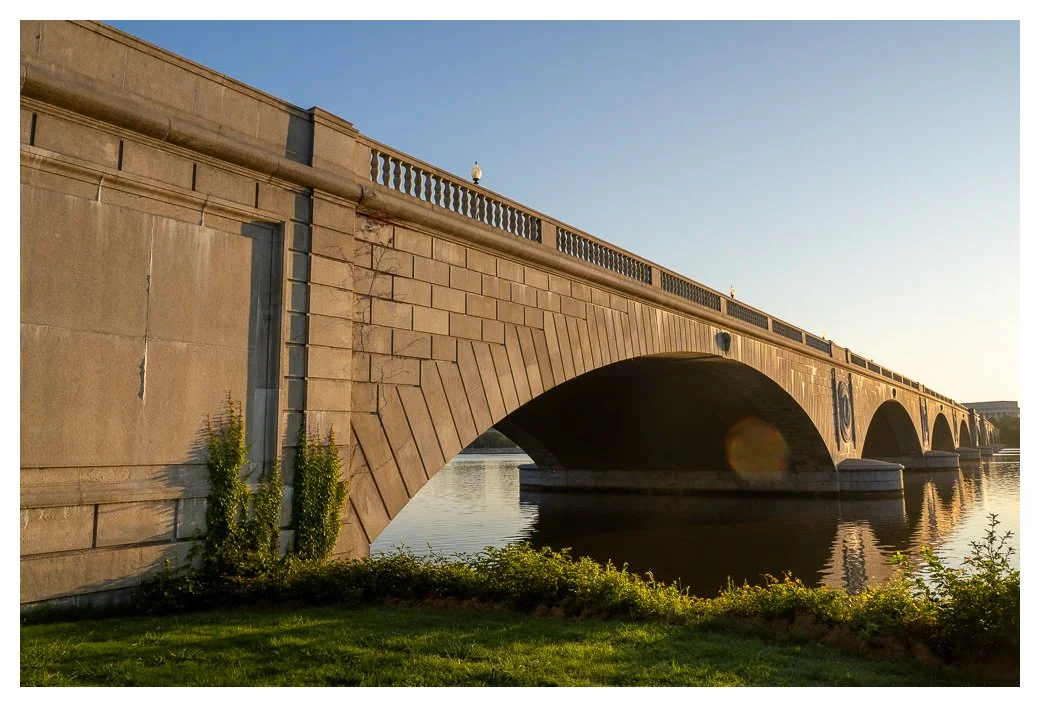
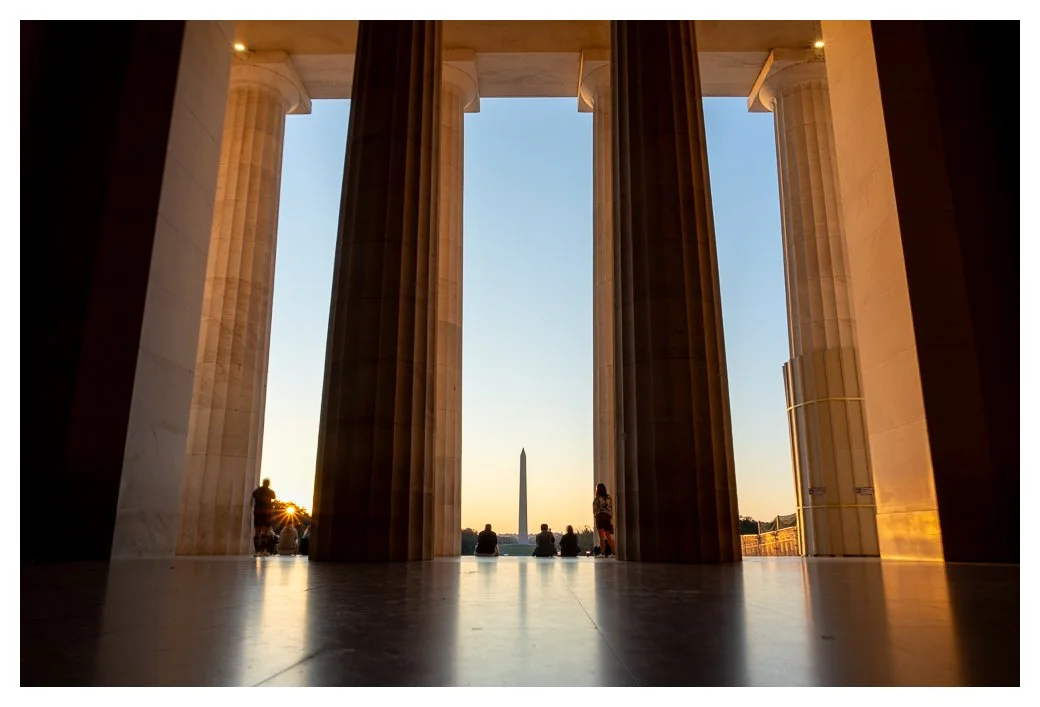
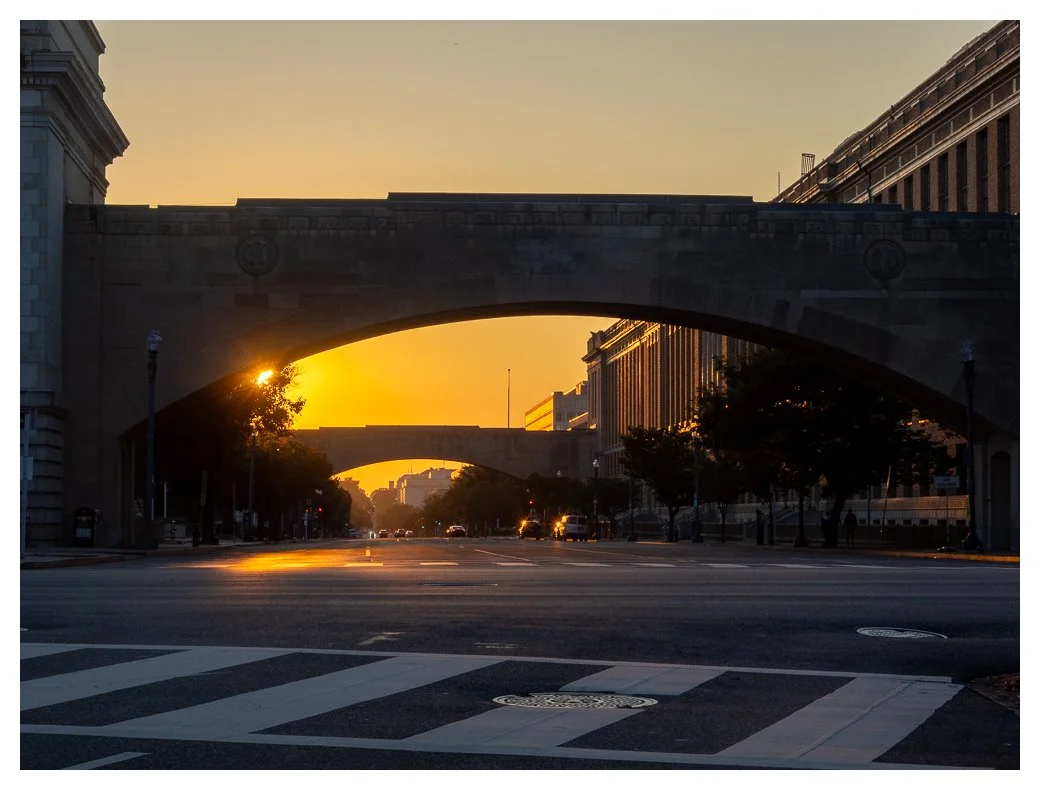
When running with a camera, you have to decide how to carry it. Galen had his chest pouch system, but those aren’t easily obtainable. Even a comparatively light setup like the OM-5 with the 12-45mm f/4 won’t fit in a pocket. Nor would you want it to bounce around in a loose pocket while running. At first I carried the camera in the backpack a hydration vest. It fit fine, and was comfortable enough for running. But it took a good deal of fussing around to pull it out. Accessing the camera required removing the running vest. It felt like too much time, and I often chose not to pursue a possibly interesting shot because it didn’t seem worth all that fuss.
But those possibly interesting shots are the key to good photos. When something catches your eye, you must stop to photograph it if at all possible. This is how you develop and benefit from photographic intuition. Without listening to this little voice that says “maybe there’s a good photo there,” you will end up with far fewer and less creative images.
Eventually I found a waist pack is a better method. It’s much faster and less conspicuous to access the camera. You can start pulling the camera out while running. But most waist packs will bounce too much with a camera inside. You need some kind of compression straps to keep it from bouncing out of sync with your own running bounce. The Black Diamond Pursuit 6 waist pack works great. There’s plenty of room for a camera and other things. It can comfortably fit even an OM-1 size body with the 12-100mm f/4 lens, though the weight of that combination is noticeable and a little unpleasant for long durations. It has two compression straps on both sides that keep the camera tight and stable while running, but which loosen quickly to access the camera. I can do a quick photo stop in about a minute, though once the camera is out I’ll usually spend an extra minute or two trying a few minor composition tweaks and a few different settings (e.g. one with a slow shutter speed, maybe one with large aperture for diffraction stars, etc.)
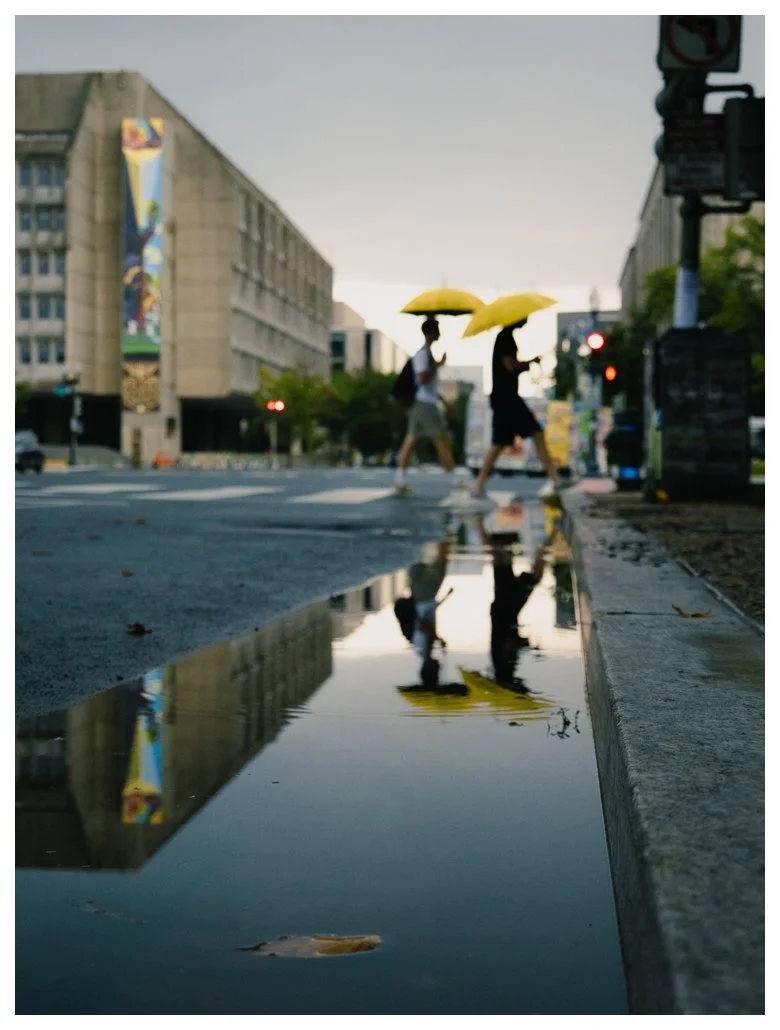
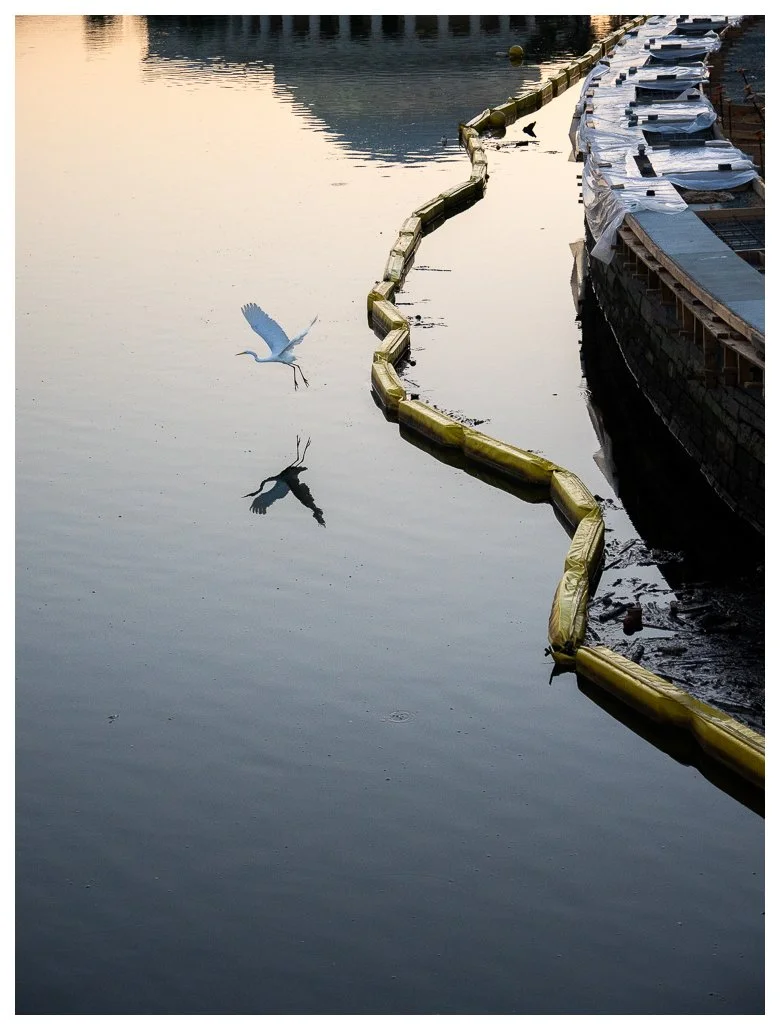
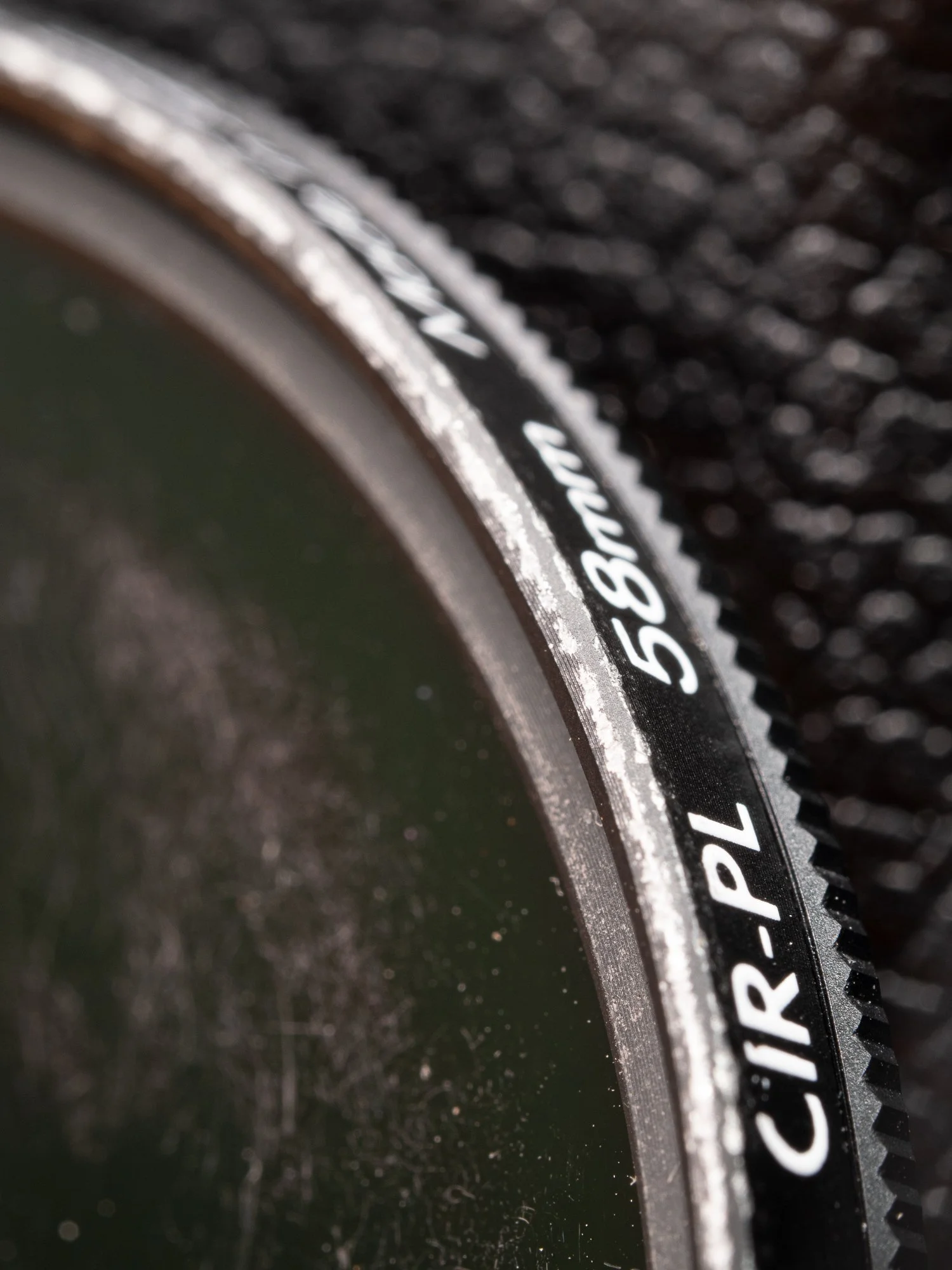
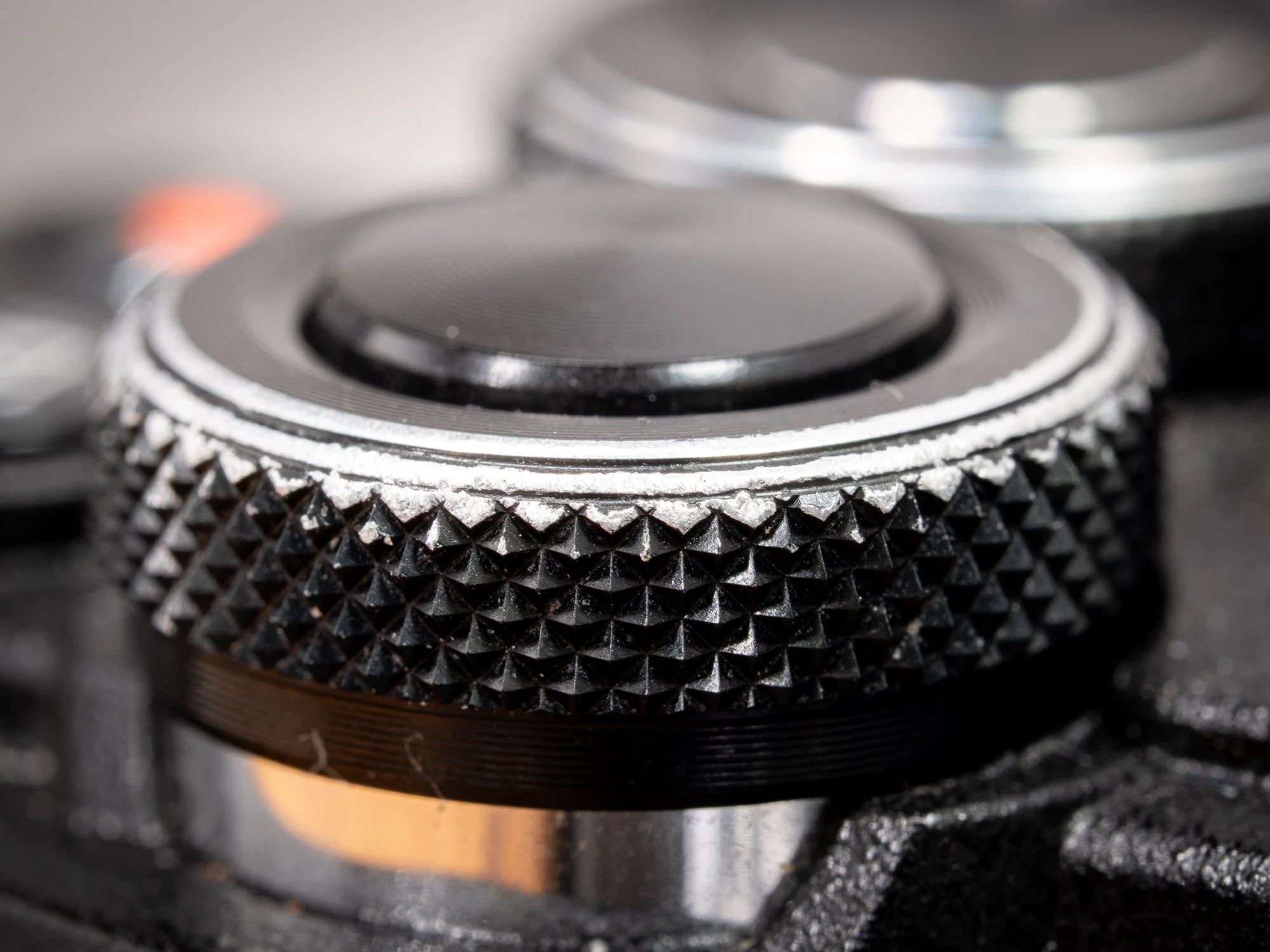
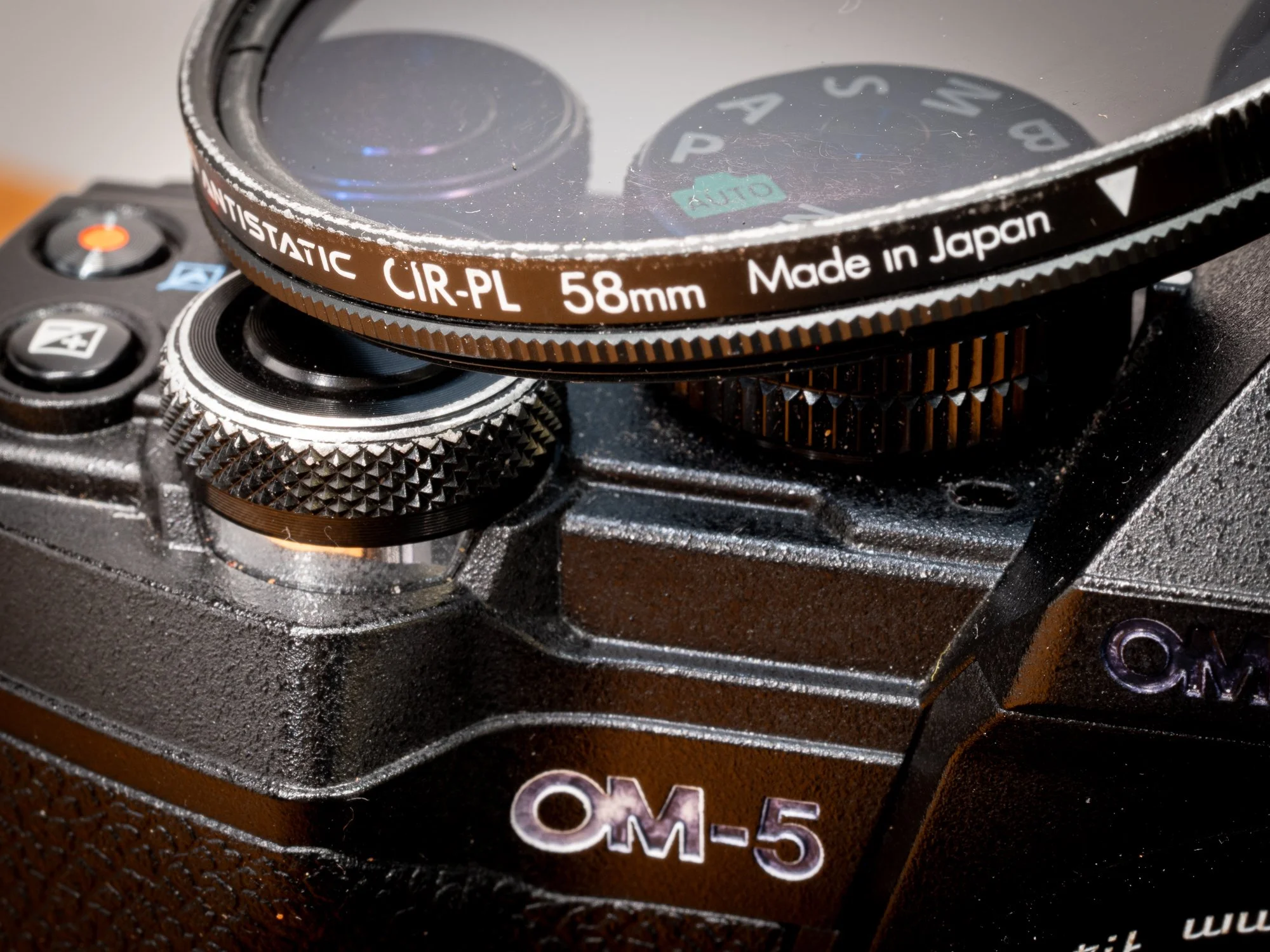
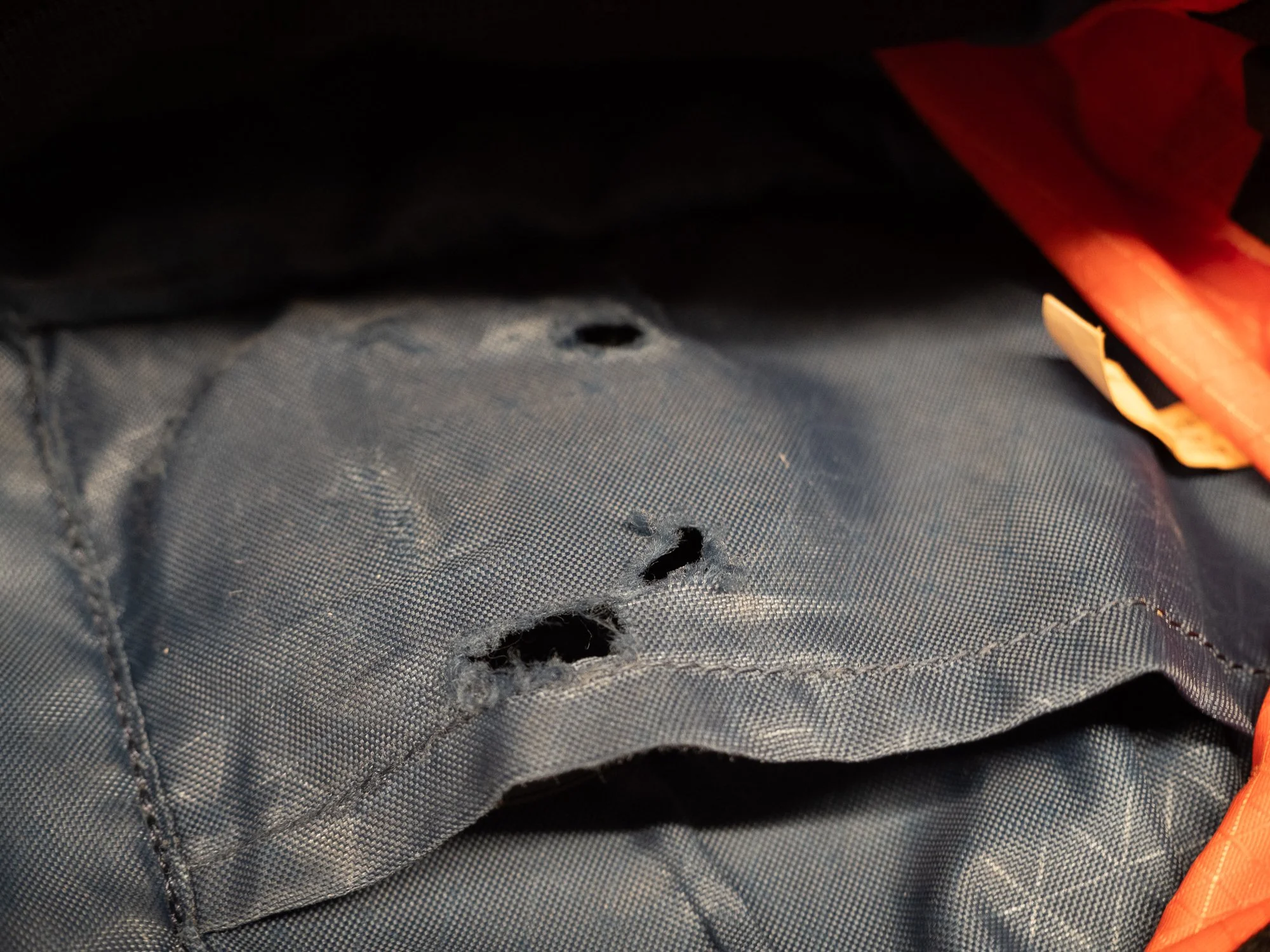
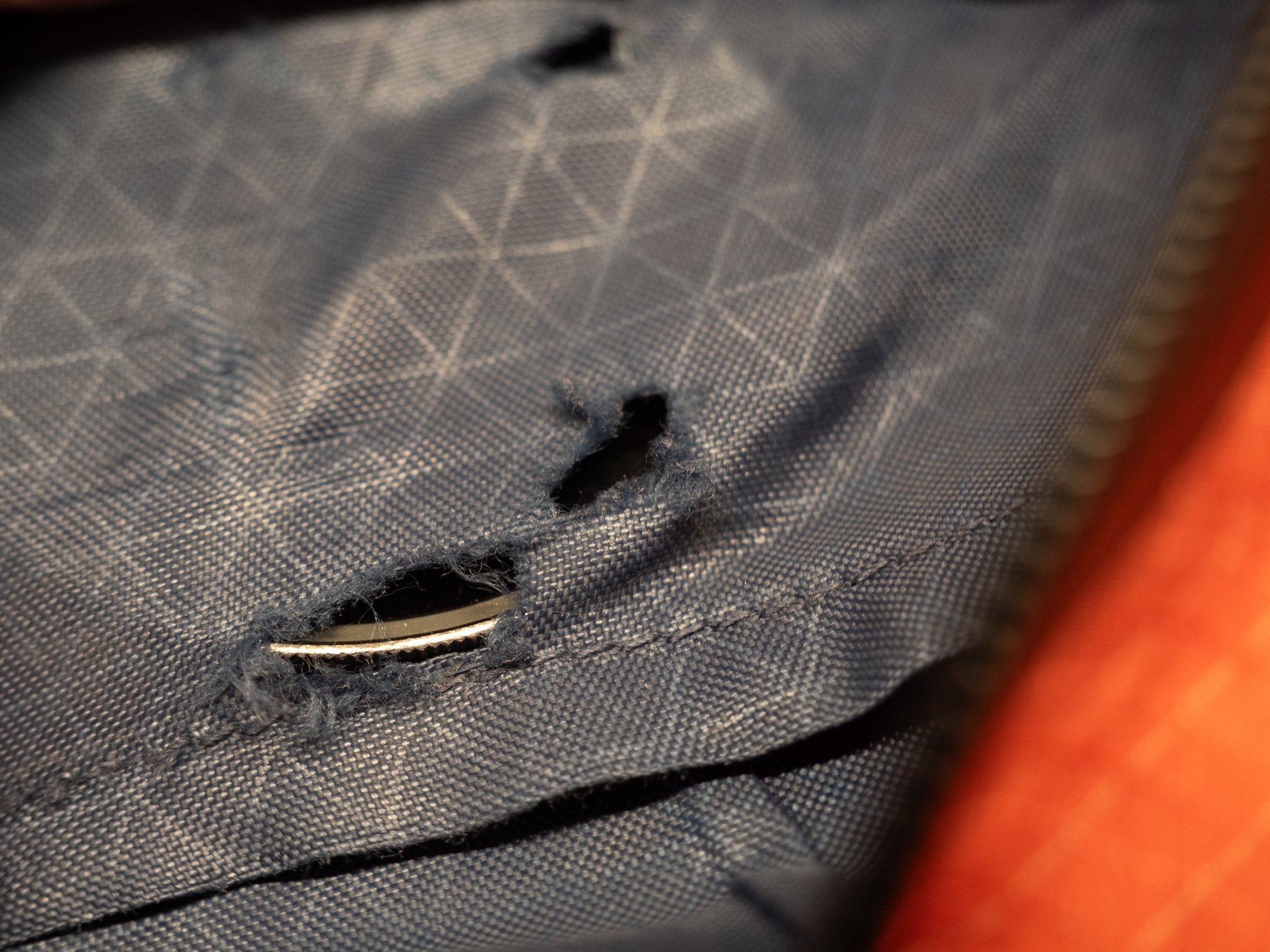
One lesson I learned through mishap is to avoid packing multiple hard things in the main pouch. I once brought a circular polarizing filter not attached to the lens, wrapped in a cloth and tucked in a small pocket. Over the course of a short 30 minute run the metal edge of the filter rubbed against the metal control dial of the OM-5 and shredded through the lens cloth, through the inner pouch, scratched the polarizer, and produced a nice silvery “patina” on the OM-5 front control dial. Thankfully the main damage was to the filter and to my waist pack. Filters must be attached to the lens while running, and other hard things should be avoided if possible or else packed securely with good protection.
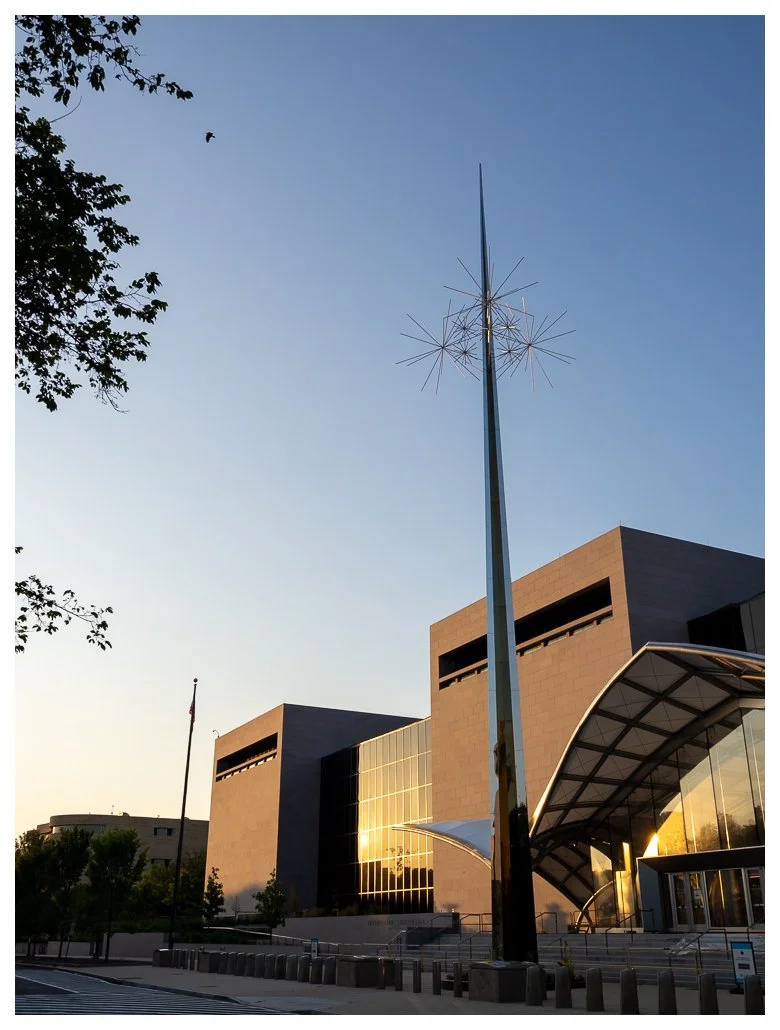
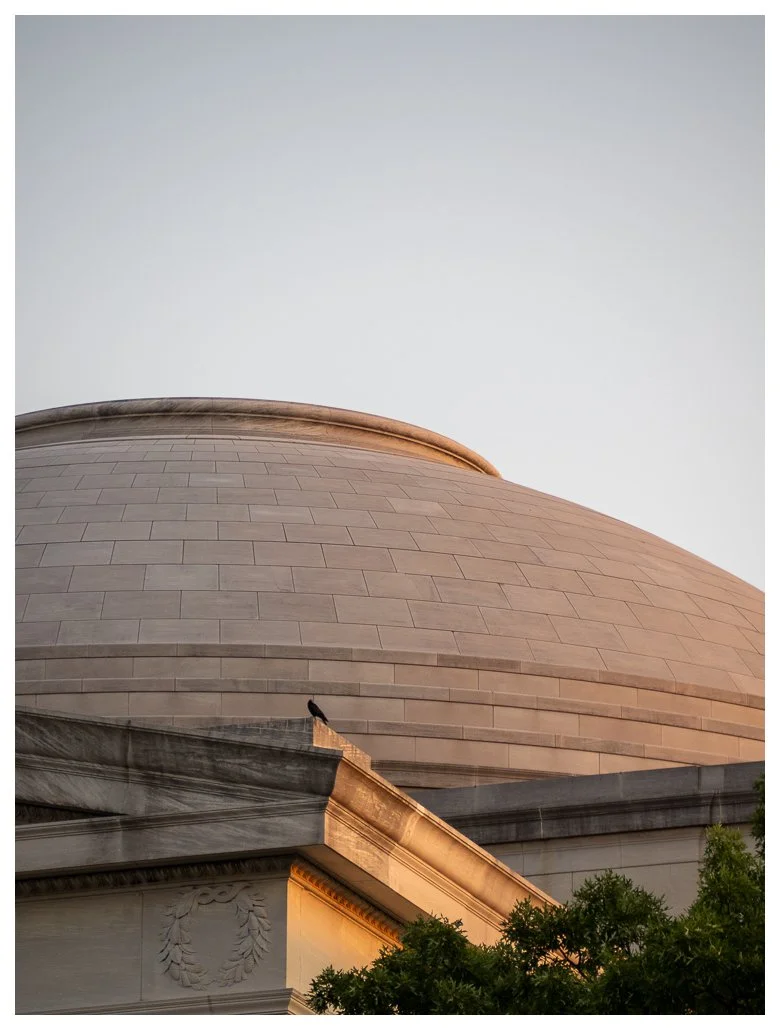
Shortly into my training I found a good deal on a refurbished OM-3. I planned to replace my OM-5 and serve as my main all-around camera. The OM-3 is not quite as small or light as the OM-5, but it has some nice features: most notably much better human detection autofocus. This was the main reason for the upgrade, and it’s an important feature for family life & adventure photography. But it’s not so important for city-scapes at dawn. The OM-3 does processes hand-held high res shots faster, and offers more stops of ND. I don’t find hand-held high res very compelling. It usually looks soft, and the motion blur often looks unnatural. But the extra stops of ND are compelling. I love long exposures, light trails, and motion blur. But the OM-5 has a nicer grip, which combined with being lighter makes it feel much easier to hold onto with tired sweaty hands.
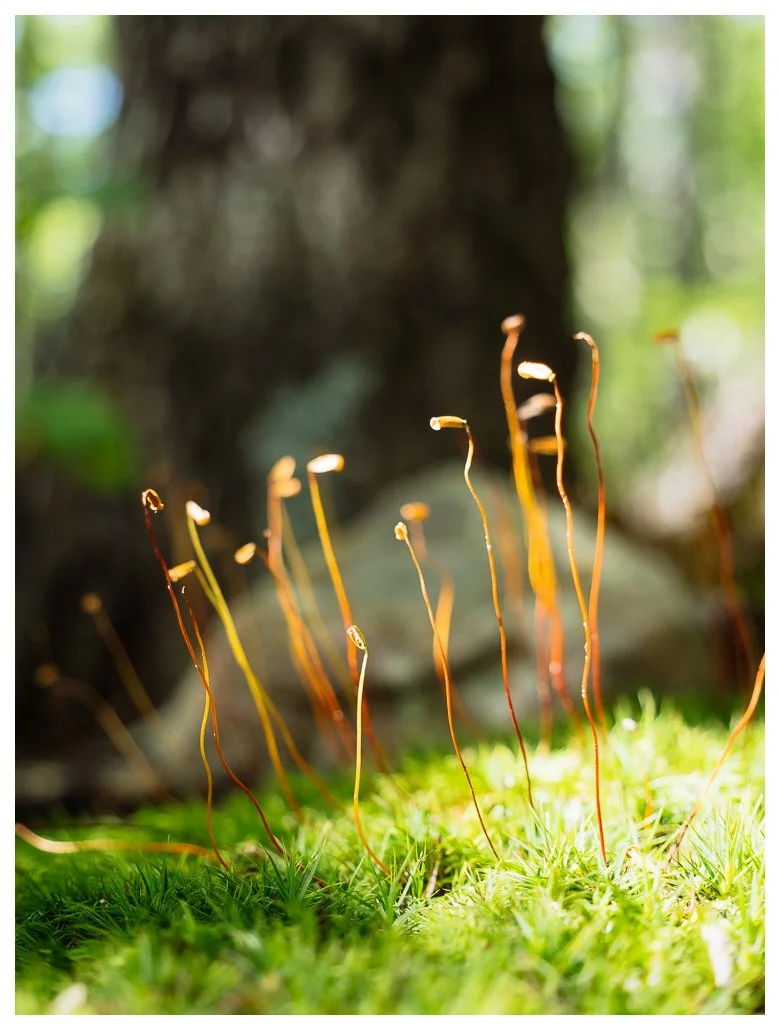
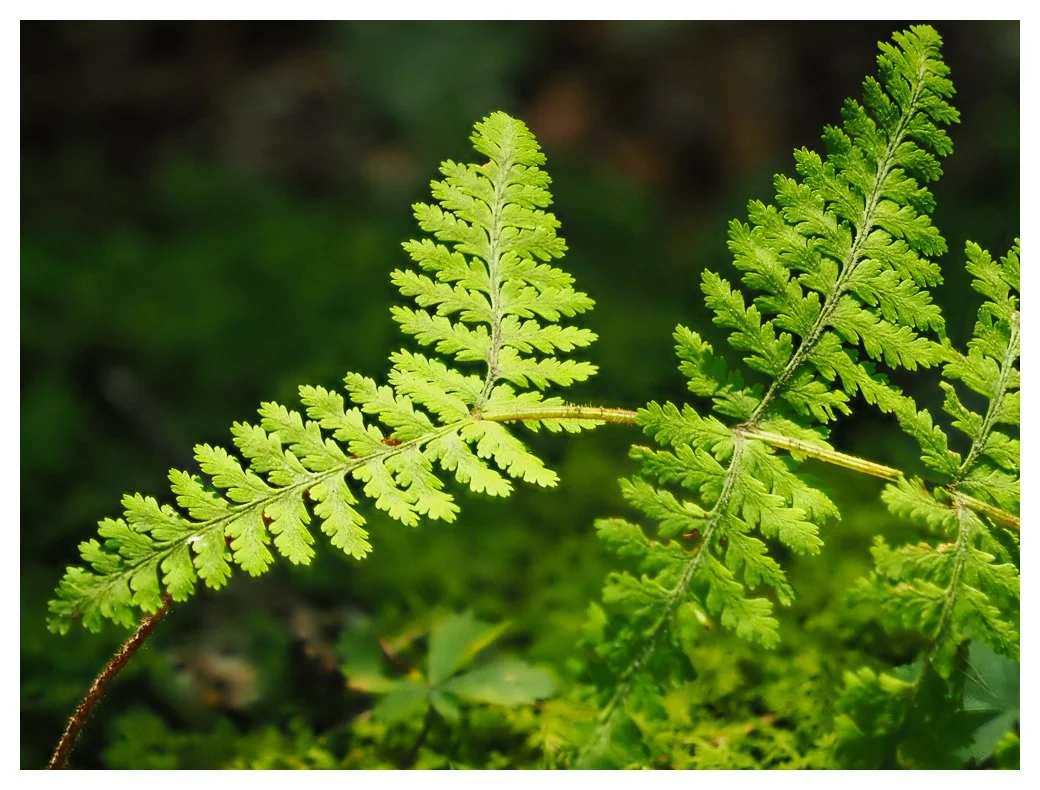
The OM-3 was my running companion for a few months. It was quite tolerable, and I got plenty of nice shots. But I went back to the OM-5 as my dedicated running camera, leaving the OM-3 dedicated for other purposes. It’s nice to have the luxury of choosing the perfect body for the situation. Part of me feels I should sell off the old camera body and commit to the OM-3 for everything. But another part enjoys having the perfect tool for the task.
My favorite lens to bring on a run are the OM 12-45 f/4 PRO (which marries superb image quality with a very reasonable size and weight). For a time I was worried about not having enough reach compared to the Olympus 14-150 f/4-5.6 ii, but I’ve found I much prefer 12mm over 14mm at the wide end, and 45mm is usually just enough for some detail on the long end.
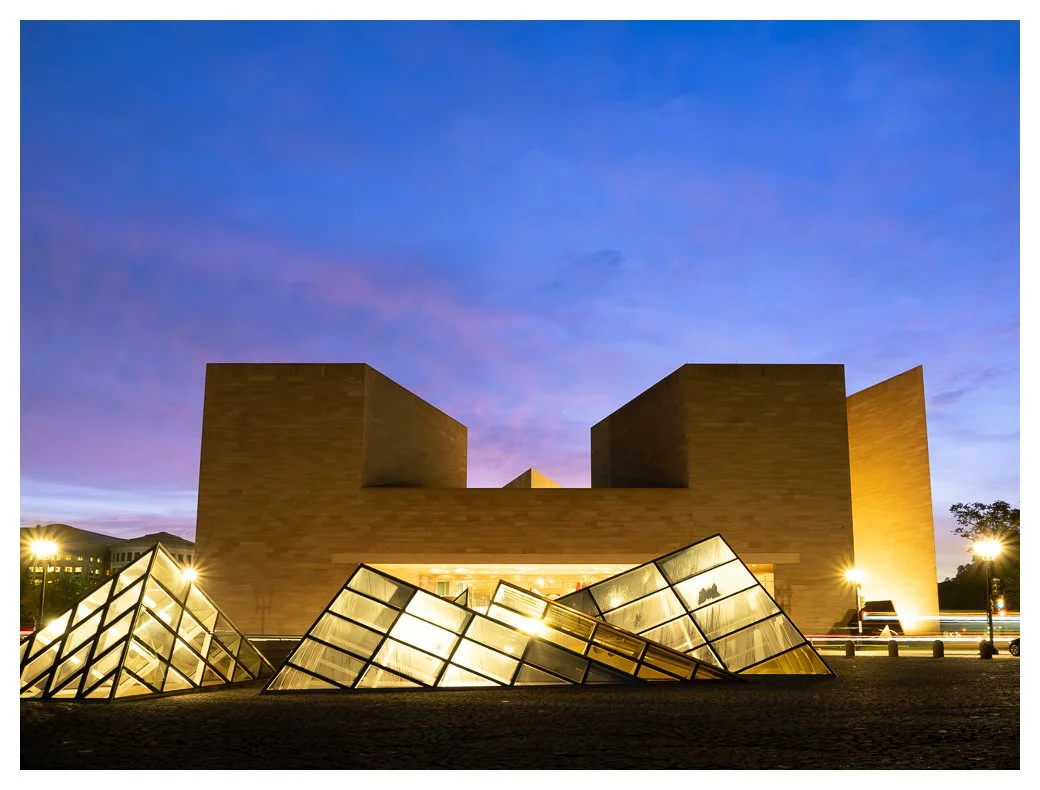
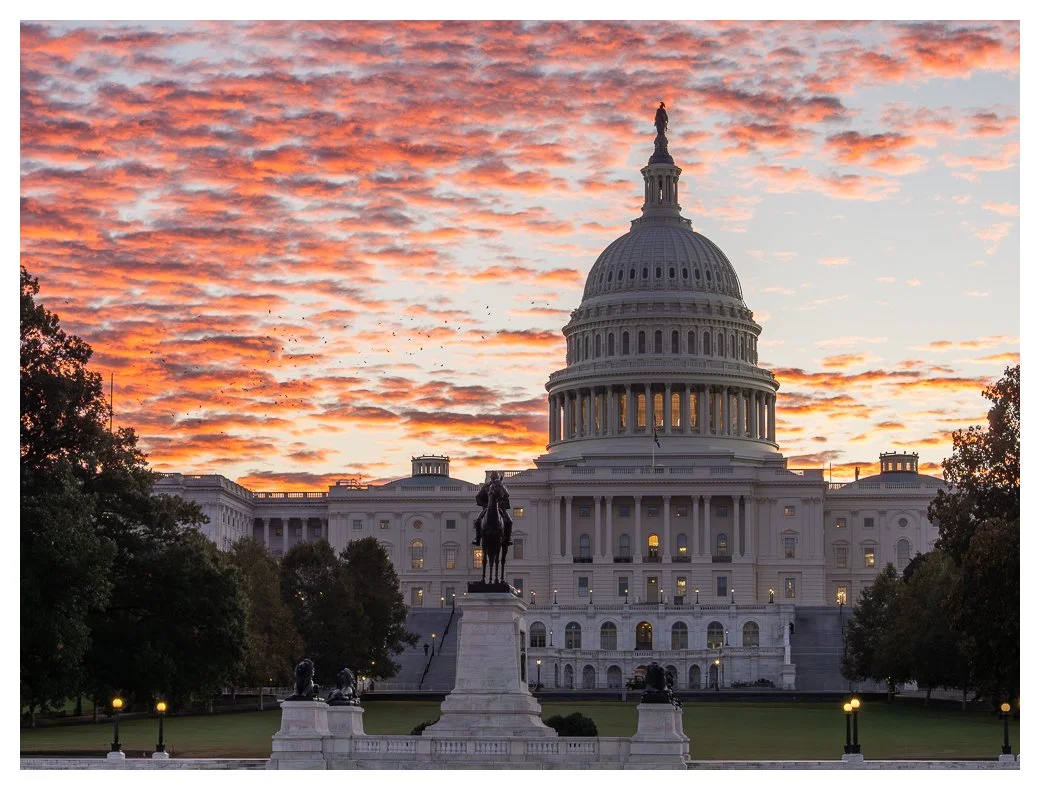
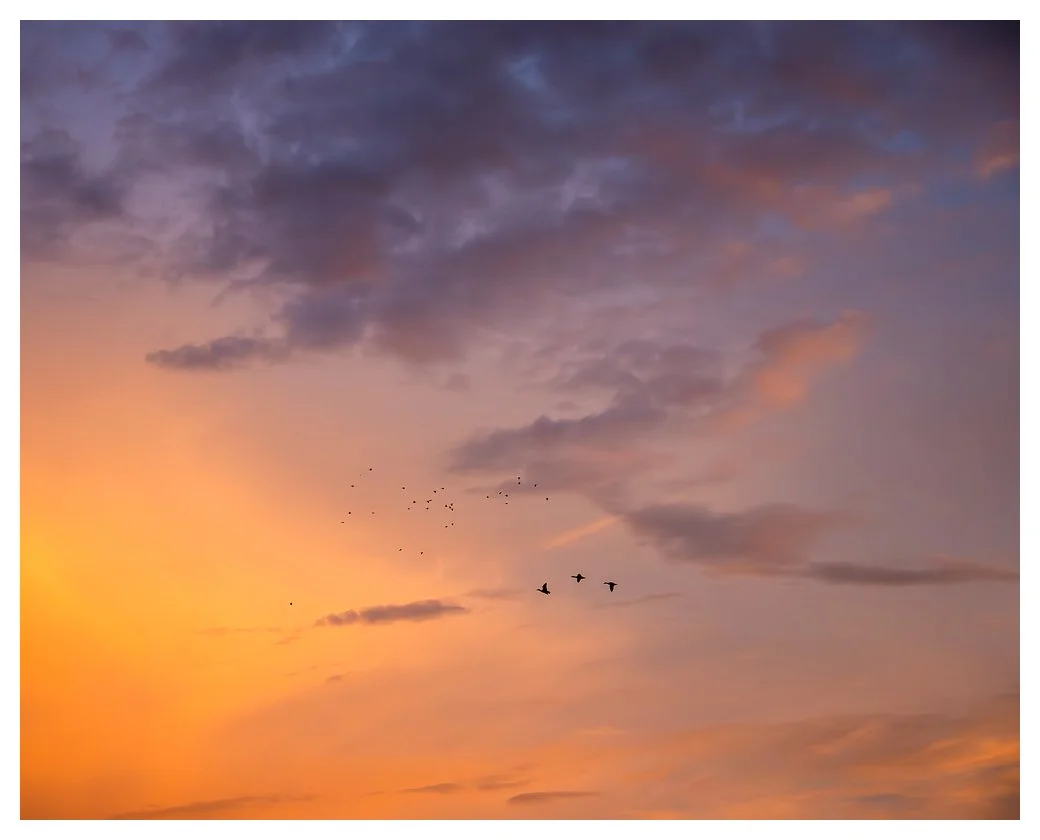
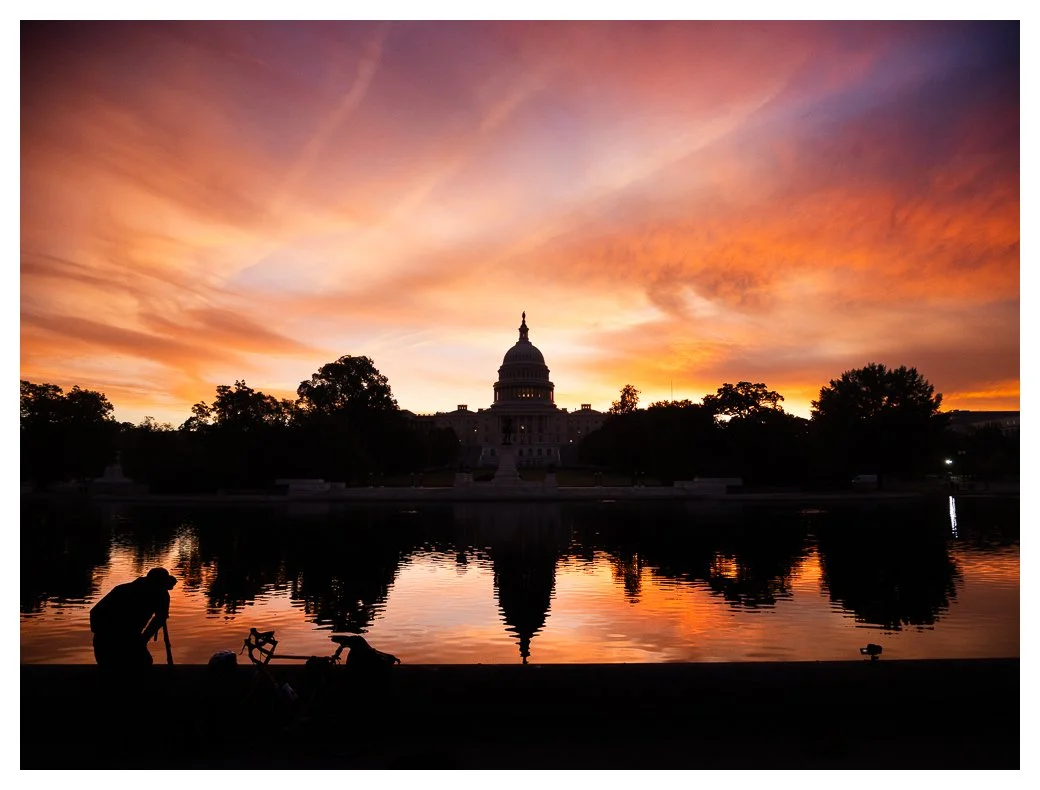
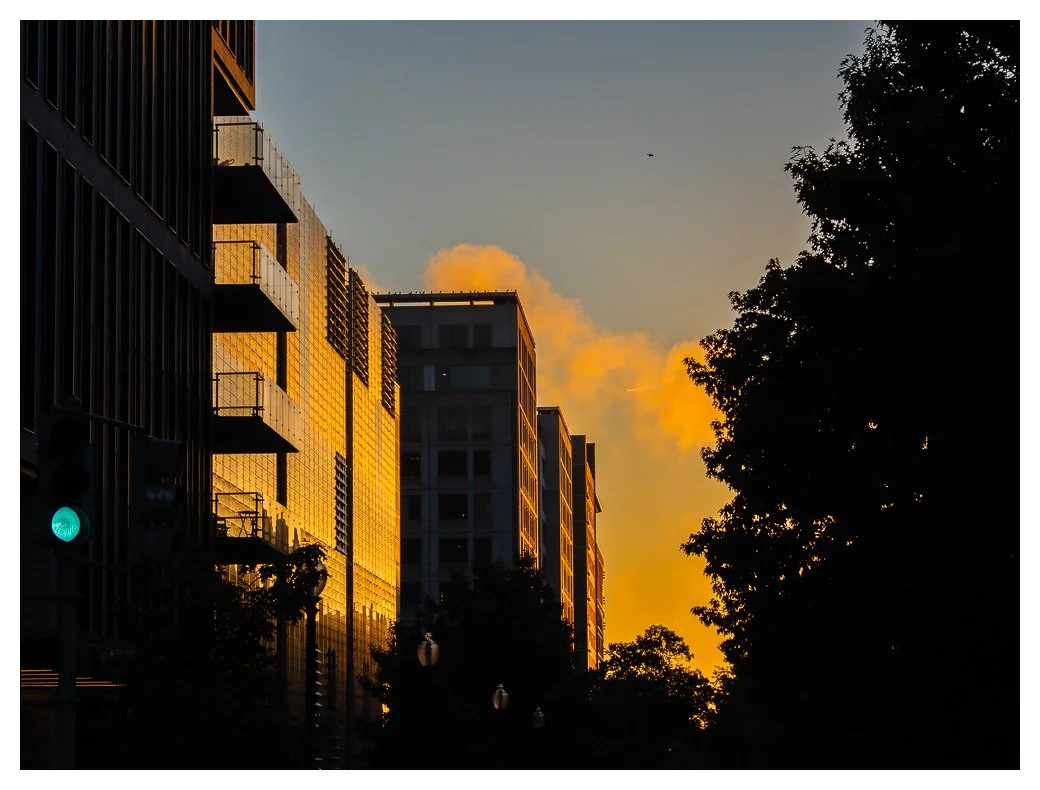
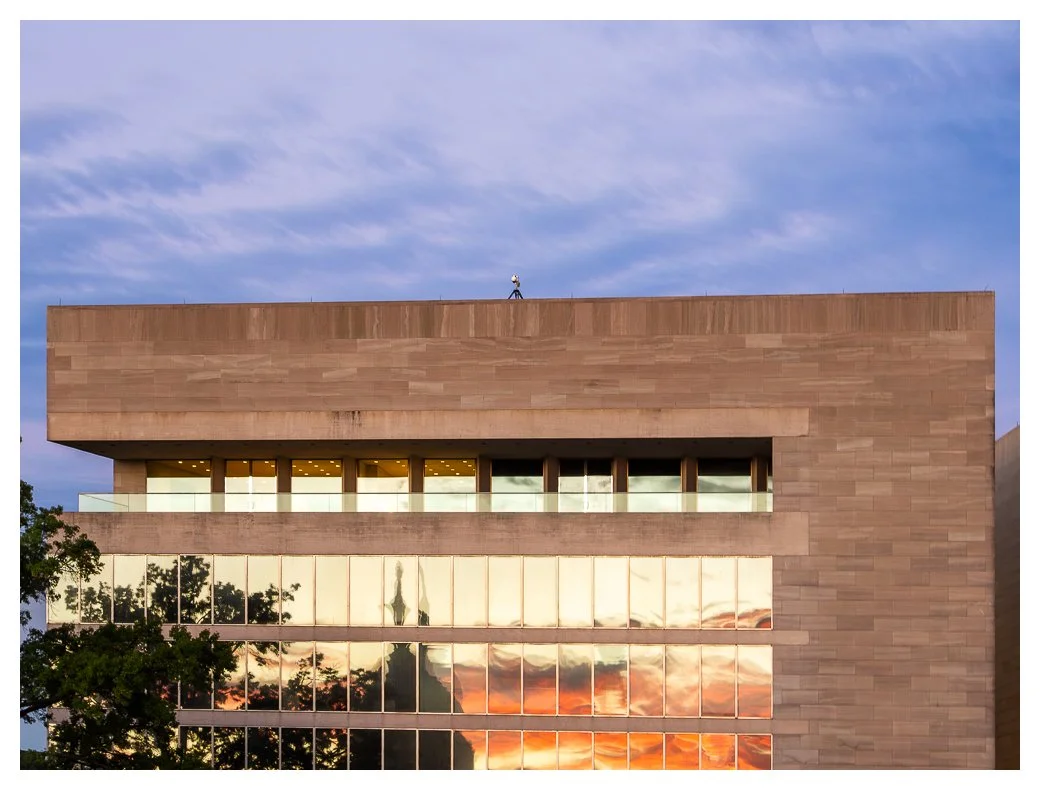
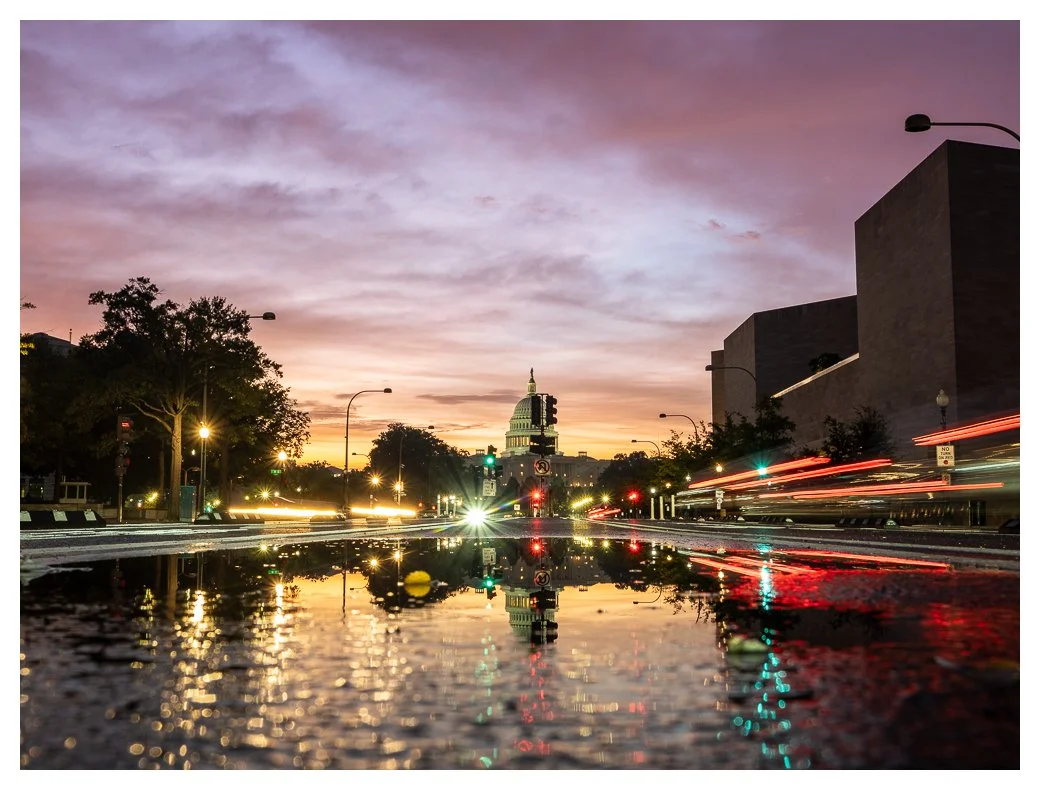
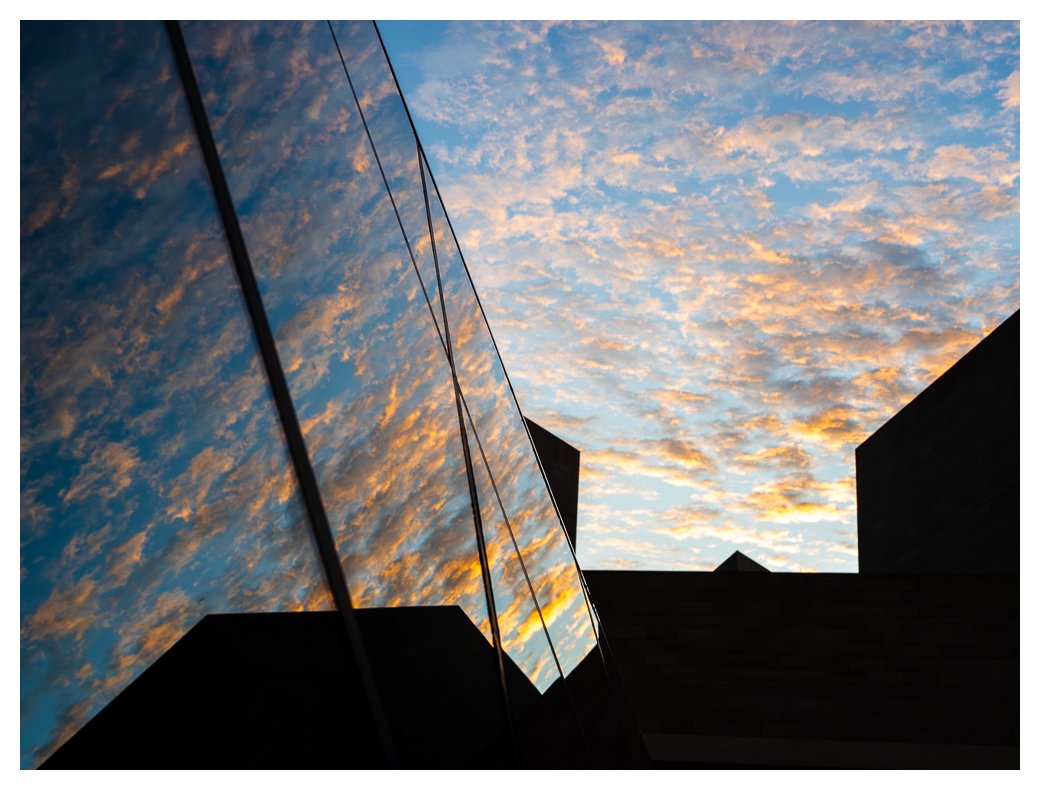
Other favorites include the Panasonic Leica 9mm f/1.7 (great for diffraction stars and including lots of sky) and the OM 40-150 f4-5.6 R (it’s silly how light it is, and it’s remarkably sharp).
Orion trails over Smithsonian Castle . OM-5 . Leica DG Summilux 9/f1.7 @ 9 mm . f/1.7 . 0.8 . ISO 1600
I had never planned to take the camera on the actual race. But after months of training runs with a camera, I started to wonder if I should. My pace wasn’t progressing to anything remarkable, so I expected to be pretty slow. Maybe having some nice pictures during the race could be a consolation prize. And maybe having an eye for pictures could help distract me from the discomfort of the long race.
It was a nice excuse to get yet another lens. I decided a small pancake zoom would be best for race day, and I got the Olympus 14-42. Besides being small it has two nice features: it automatically extends out when the camera is turned on, and it has a built in lens cap. I configured the OM-5 to turn on with the 1/2 switch so I could operate it one handed. I was able to pull the camera out and snap a picture while running. Not at top speed, but at slow marathon speeds it was quite manageable.
OM-5 . Olympus 14-42mm f3.5-5.6 EZ @ 14 mm . f/3.5 . 1/500 . ISO 6400
I kept the camera in shutter speed priority and low speed burst mode .I knew I wanted to play with motion blur sometimes, and other times have sharp photos. Depending on what I was going for, I could use the back dial to switch between a slower speed like 1/40” to allow some blur, or a faster speed like 1/250” to freeze motion. The front dial could manage exposure compensation if necessary. Every shot I could do a few at low-speed bursts in hopes that some would capture the interesting moment with the right amount of sharpness and blur. I think it worked out pretty well. I got a few shots that I really like, and which are great memories of the day. I think I appreciated the beauty of the course more, and was more aware of other runners and onlookers.

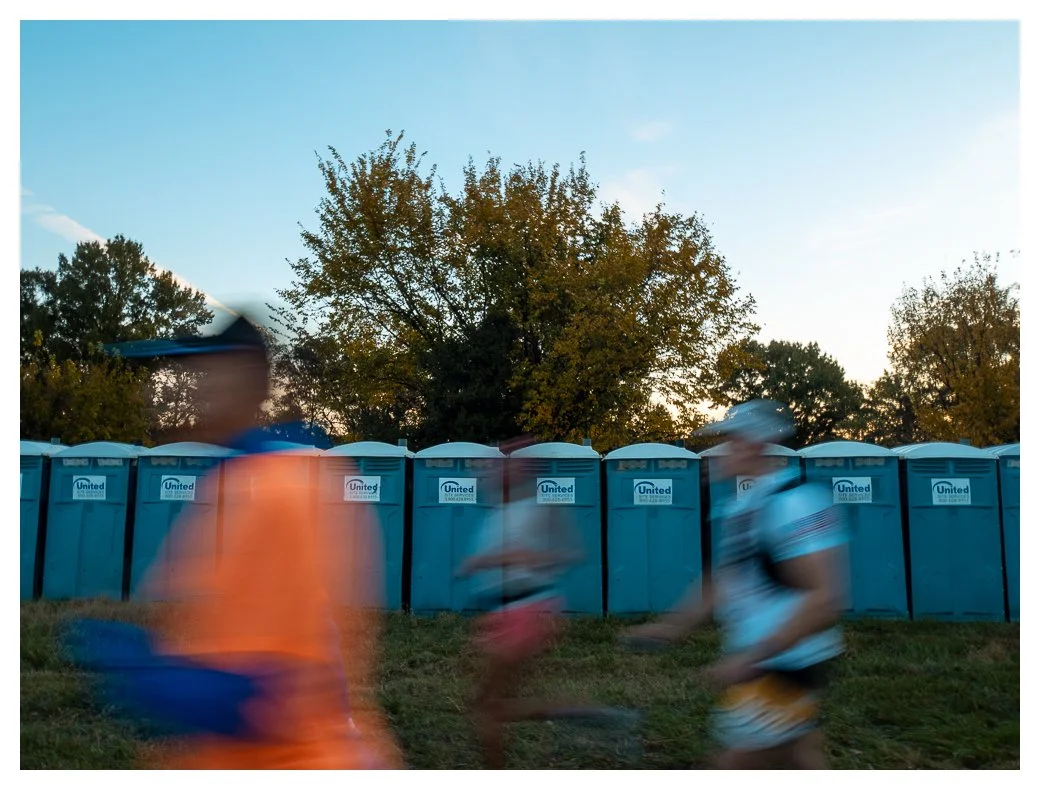
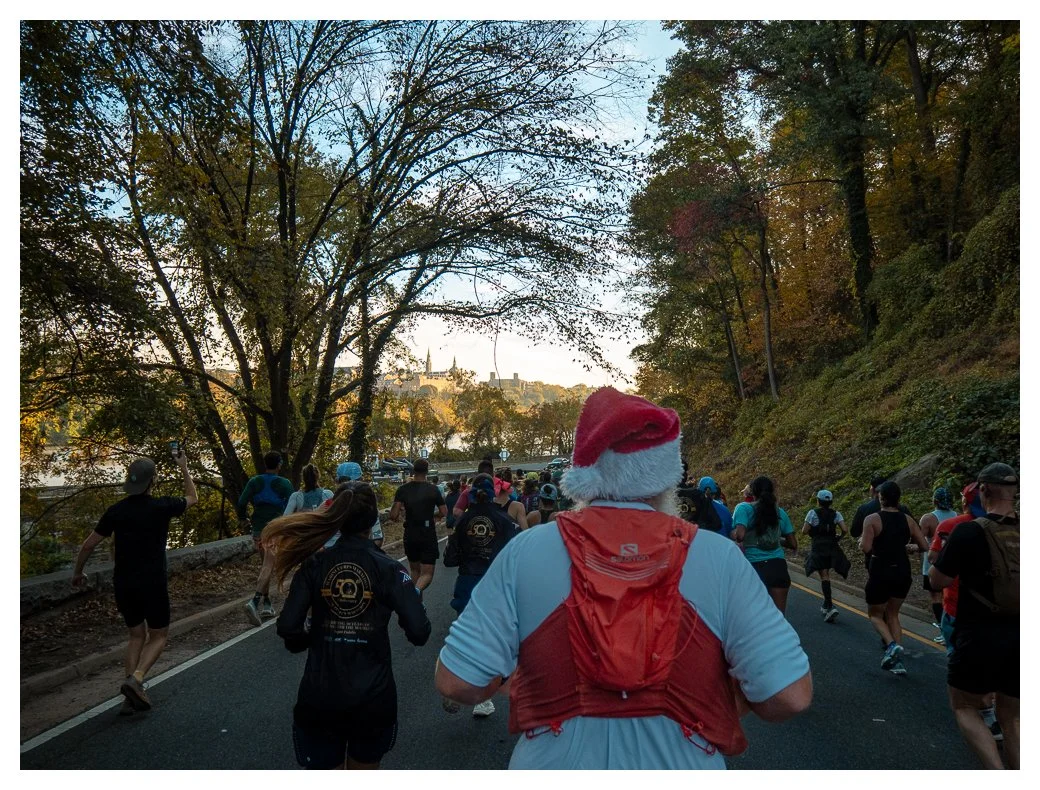


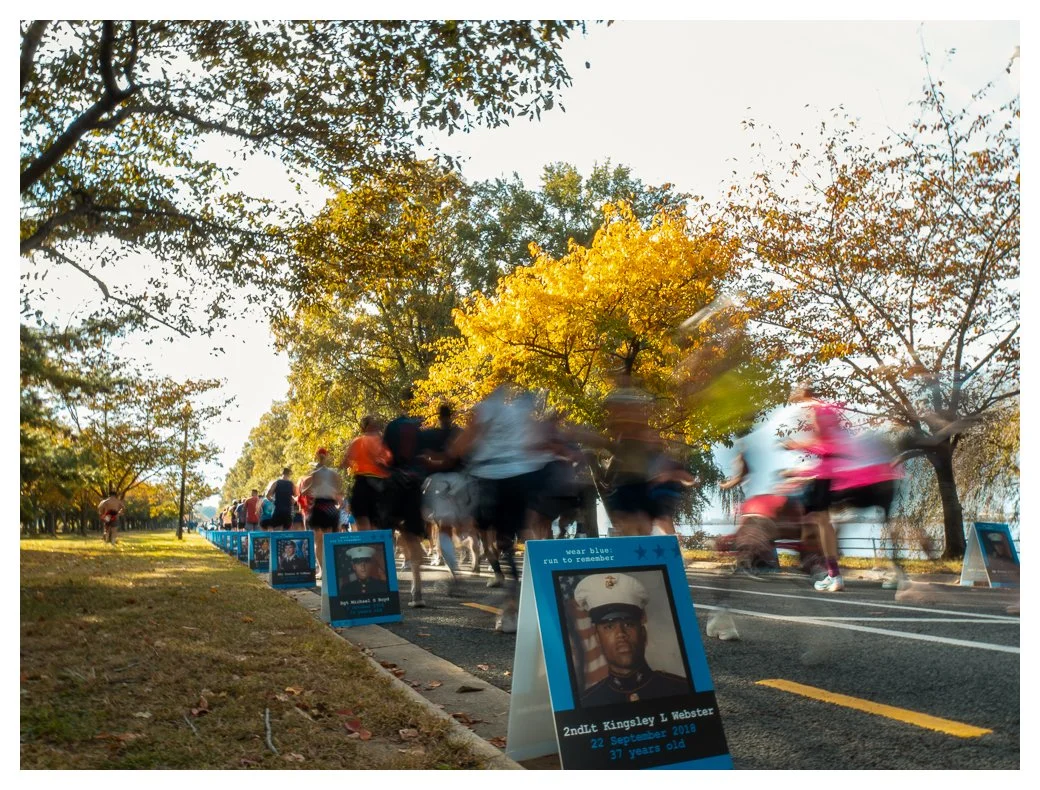
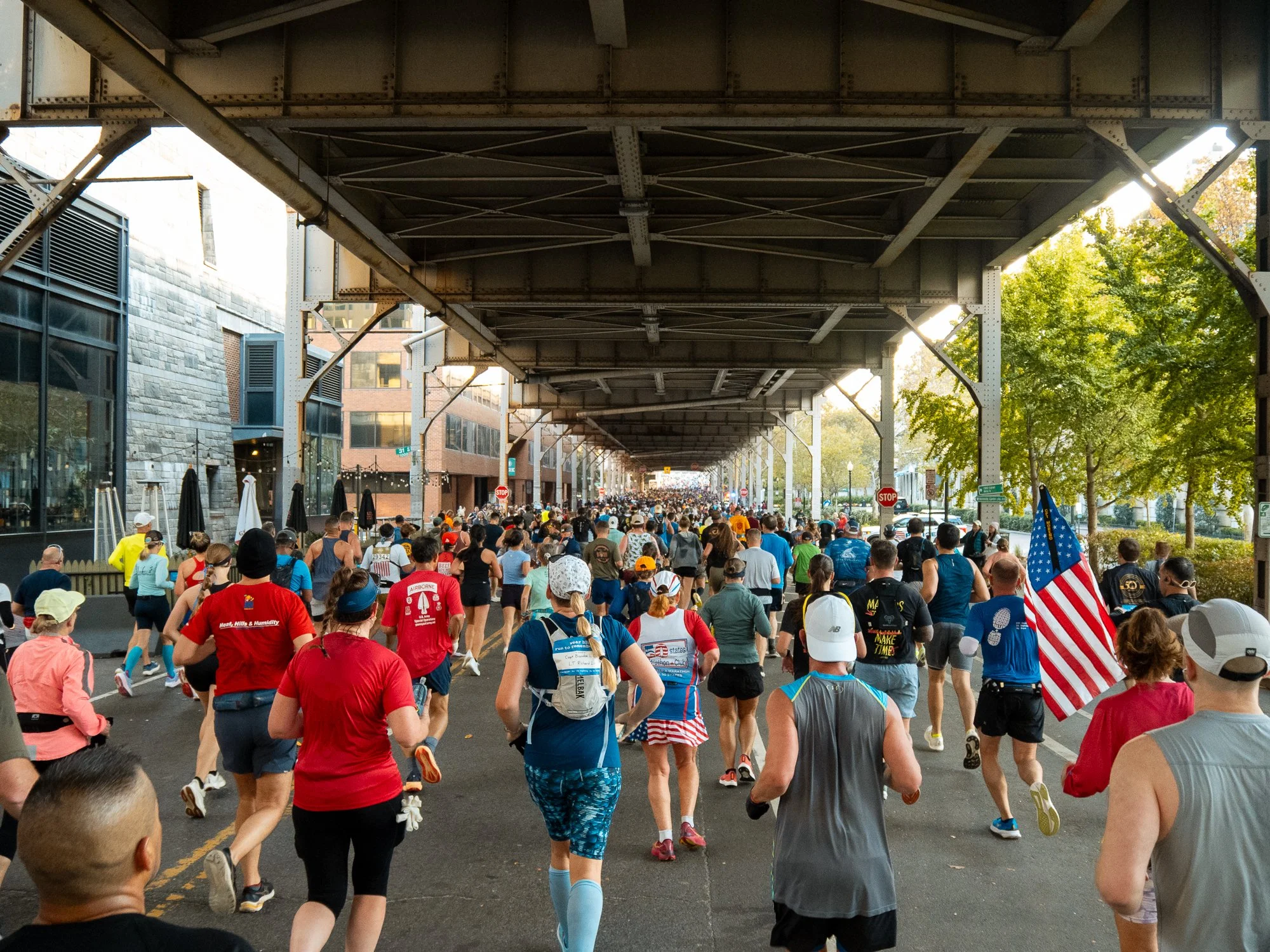
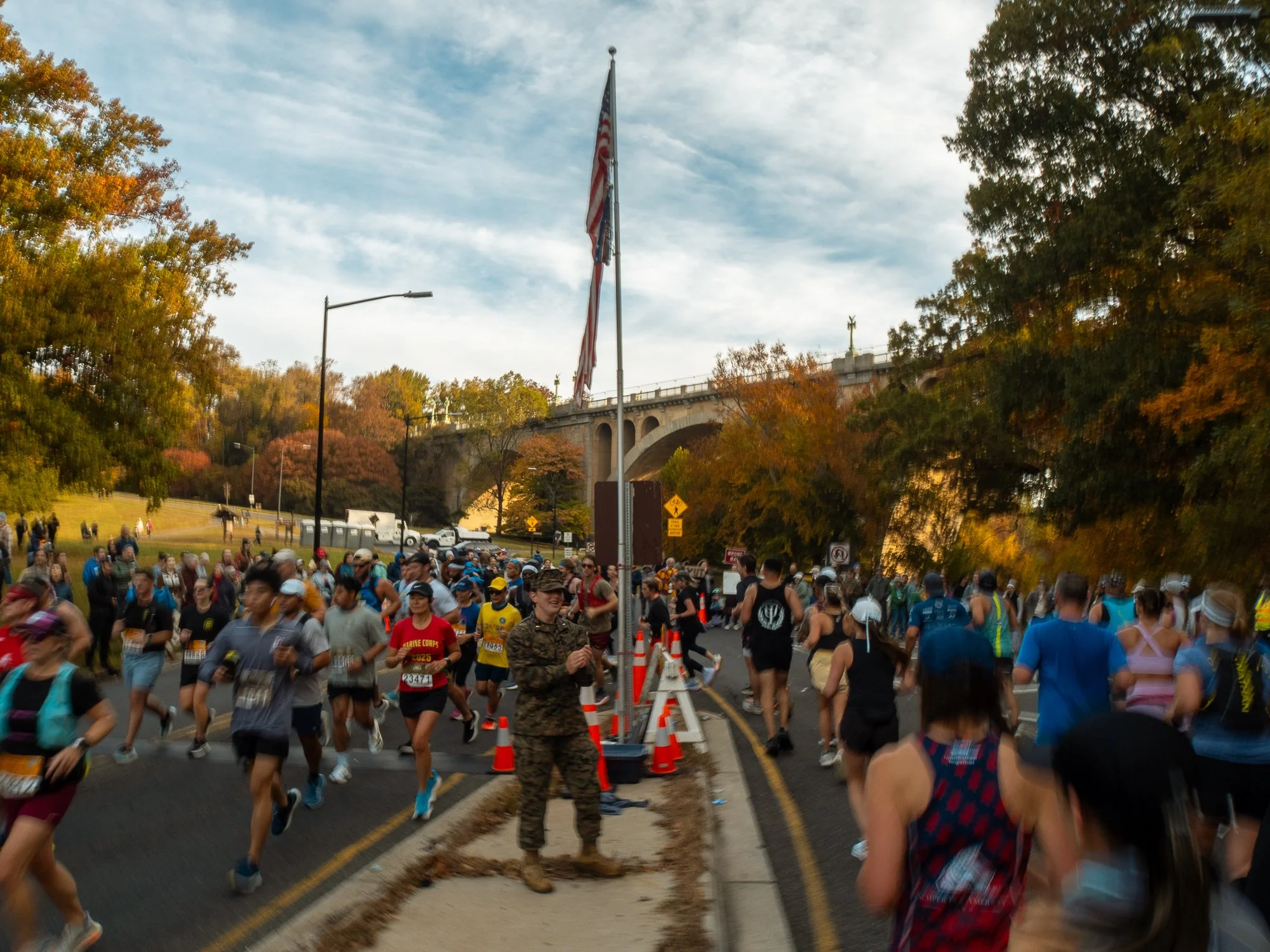
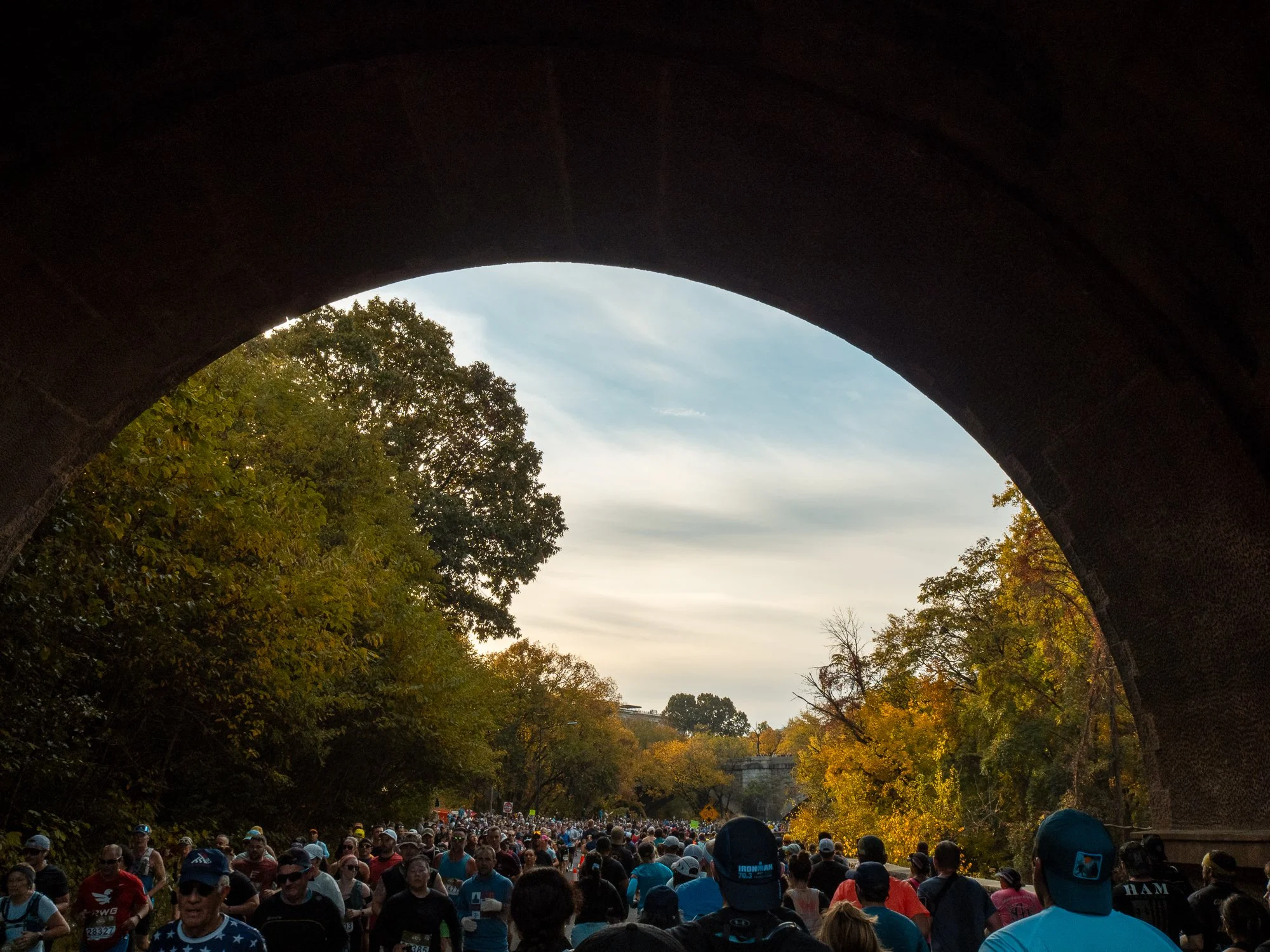
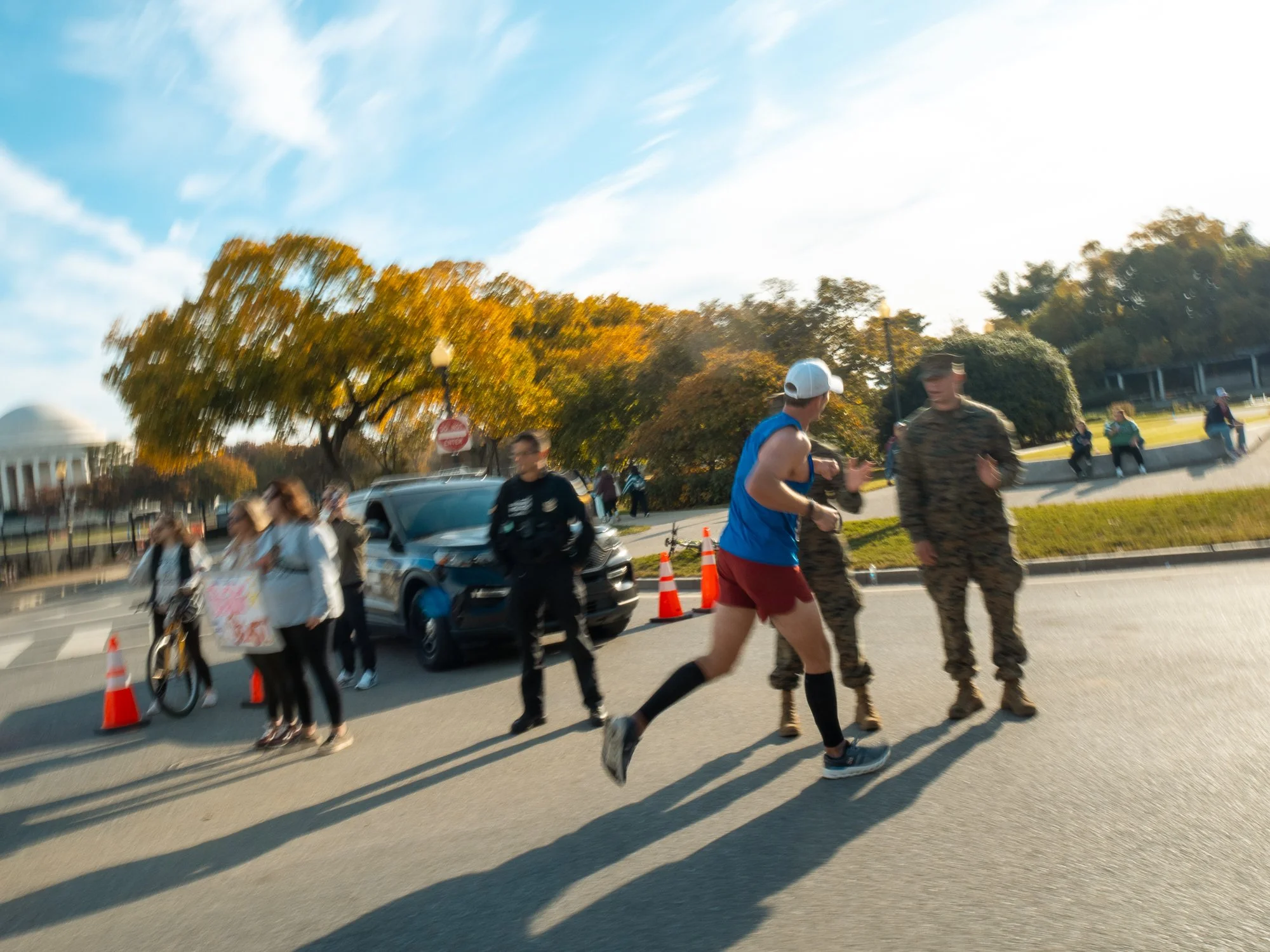
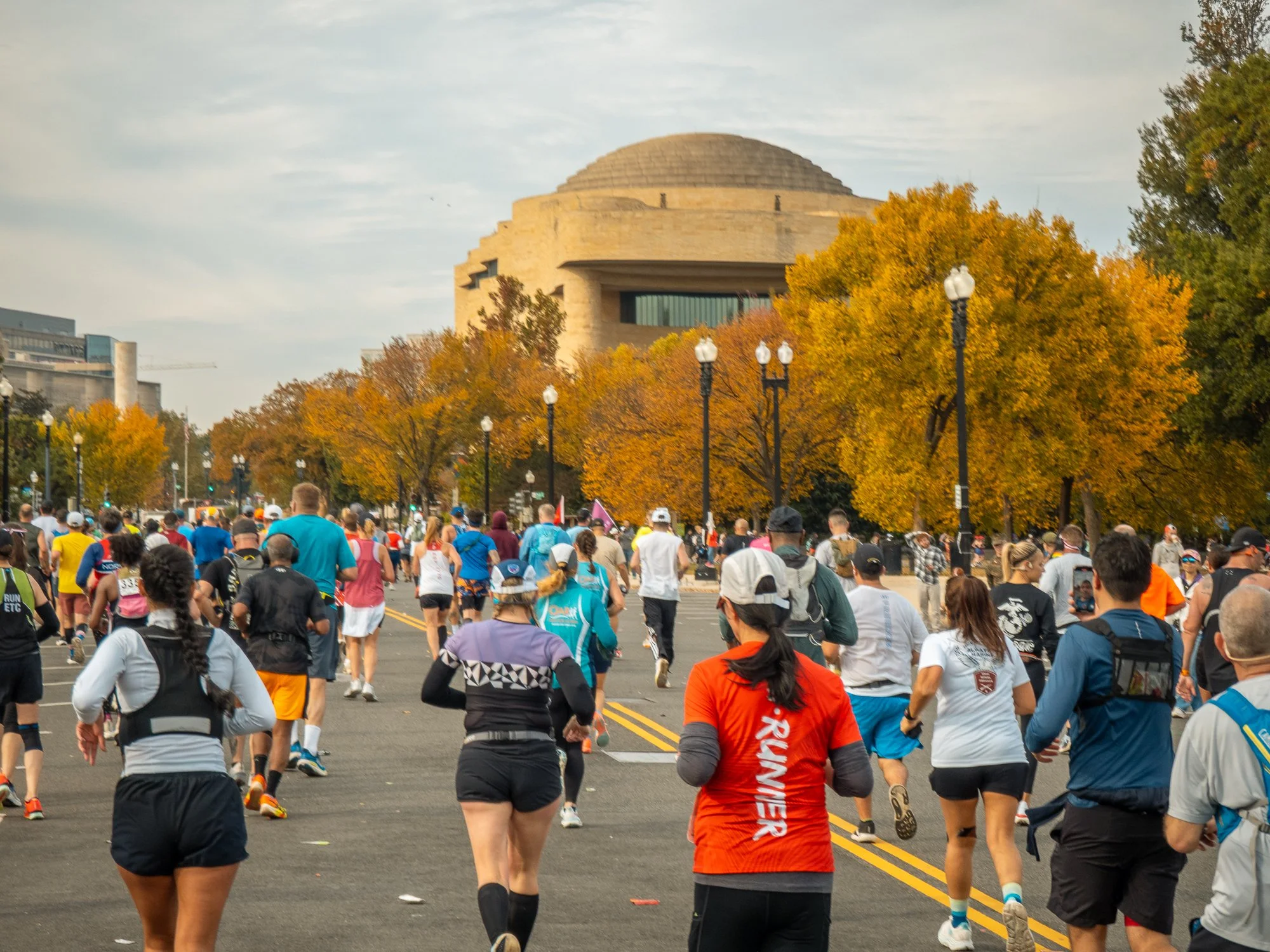
As usual, the last six miles were very challenging especially mentally. I didn’t take any pictures in those last miles, despite a number of walk breaks that I felt were necessary to stave off leg cramps. Finishing was a relief, some joy, quickly followed by an oppressive mass of humanity, a slow extrication from the crowd, an overwhelmed cellular network, a too-crowded metro, a dead phone battery, and a long walk back from Rosslyn to where I’d left my bike near the Pentagon. But again the camera was a comfort and a distraction, and the prospect of looking through my pictures gave me the usual feeling of hopeful anticipation. I’m not sure I’ll run another organized road marathon, but I will certainly continue to run with a camera.
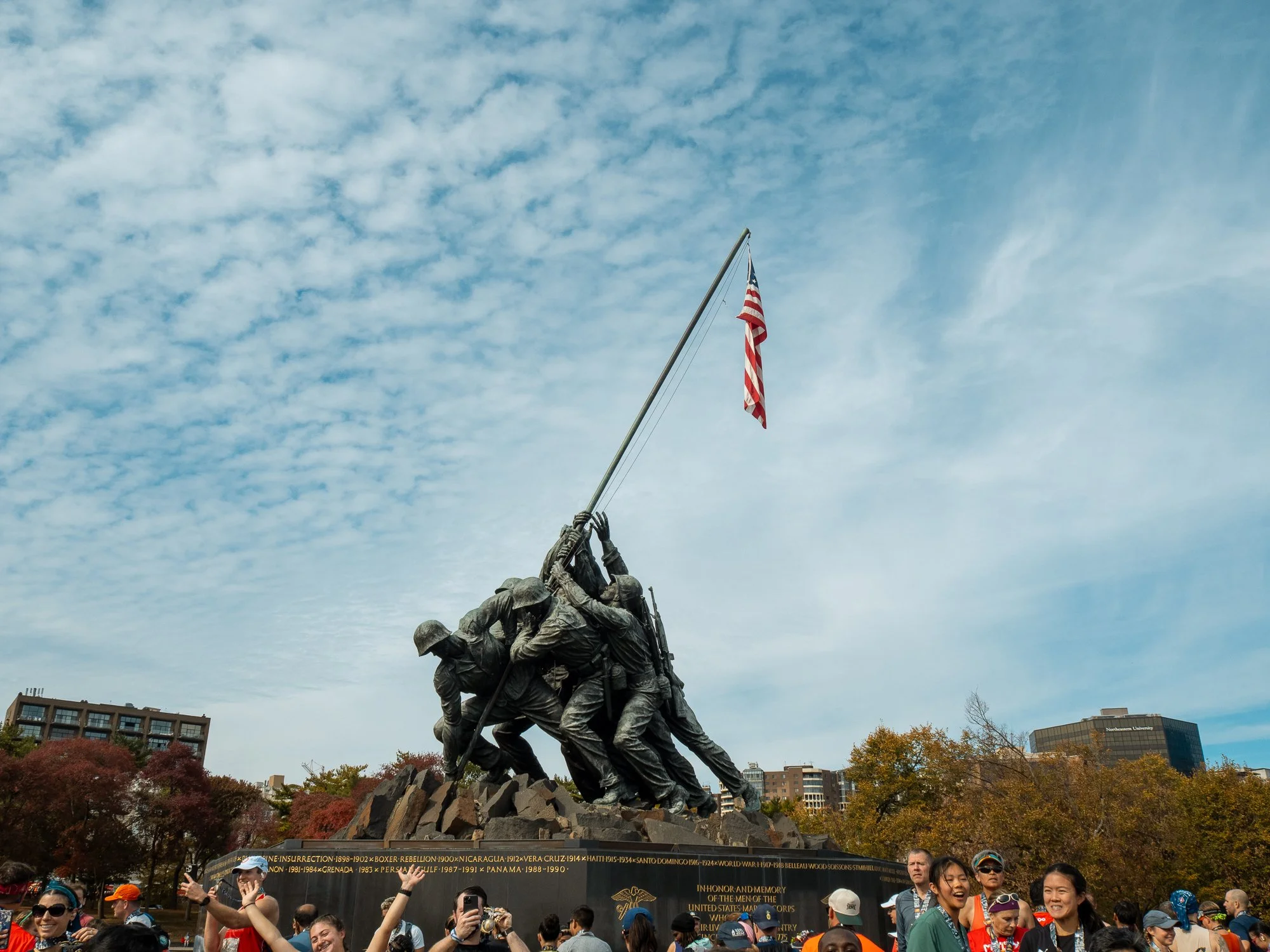
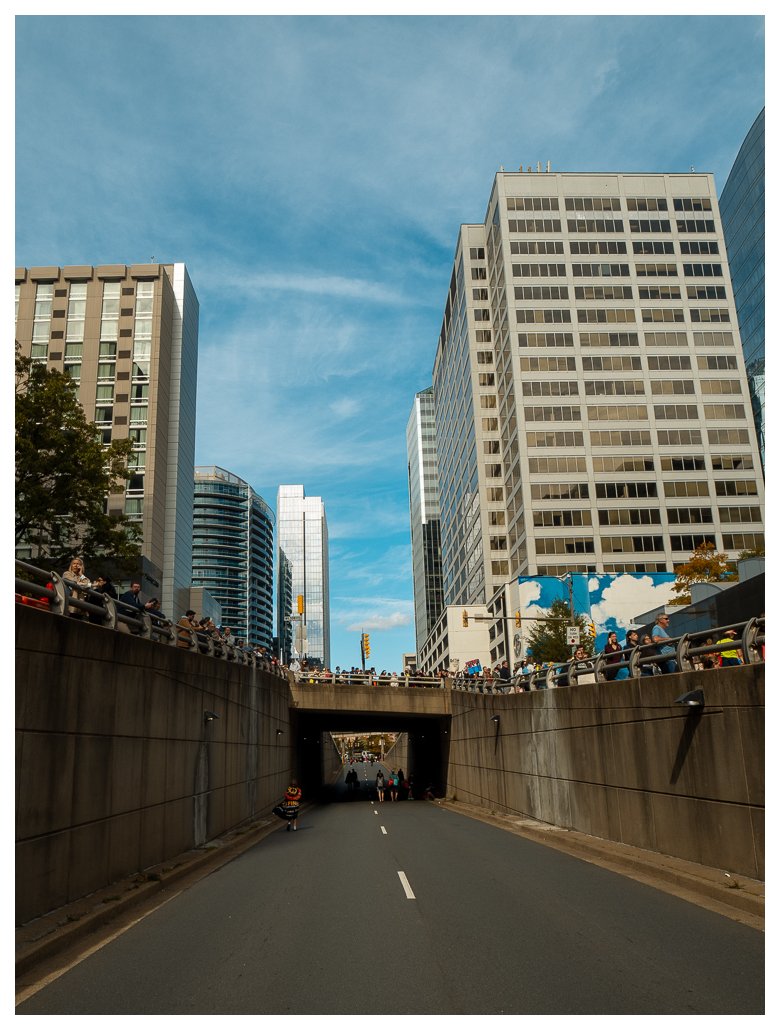
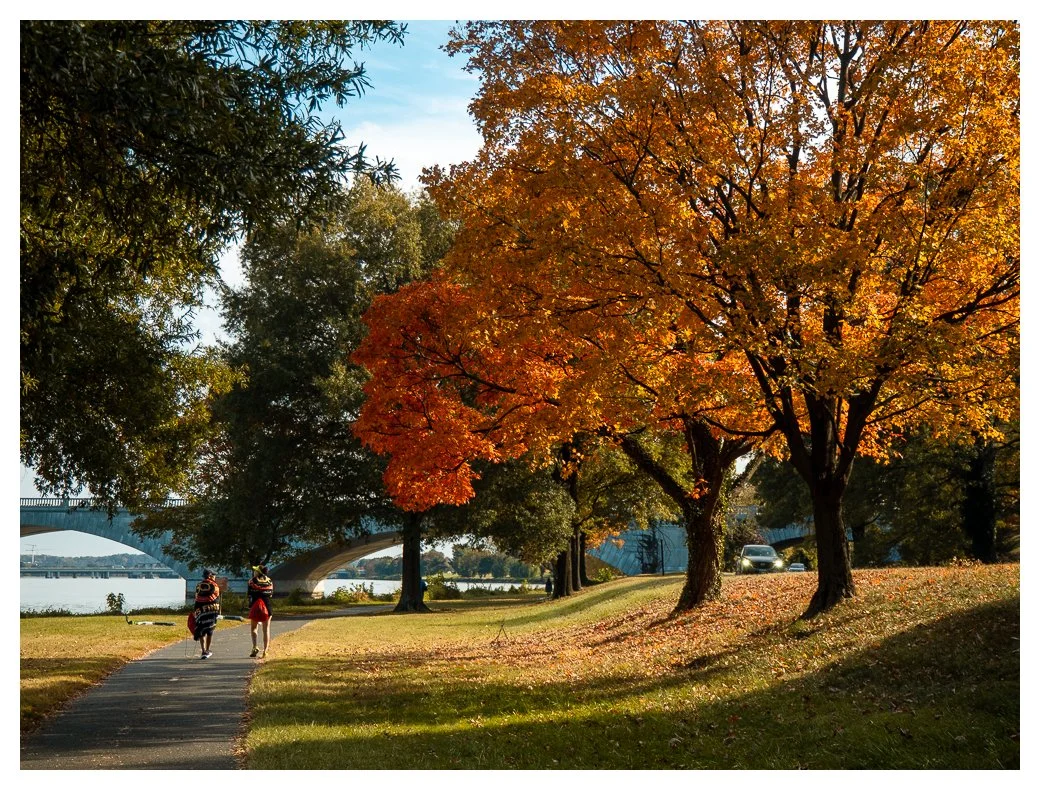
Walking home from the Marine Corps Marathon . OM-5 . Olympus m.14-42mm f3.5-5.6 ez @ 30 mm . f/5.6 . 1/400 . ISO 200